
Exhaust Smoke Colours: White, Blue and Black Explained
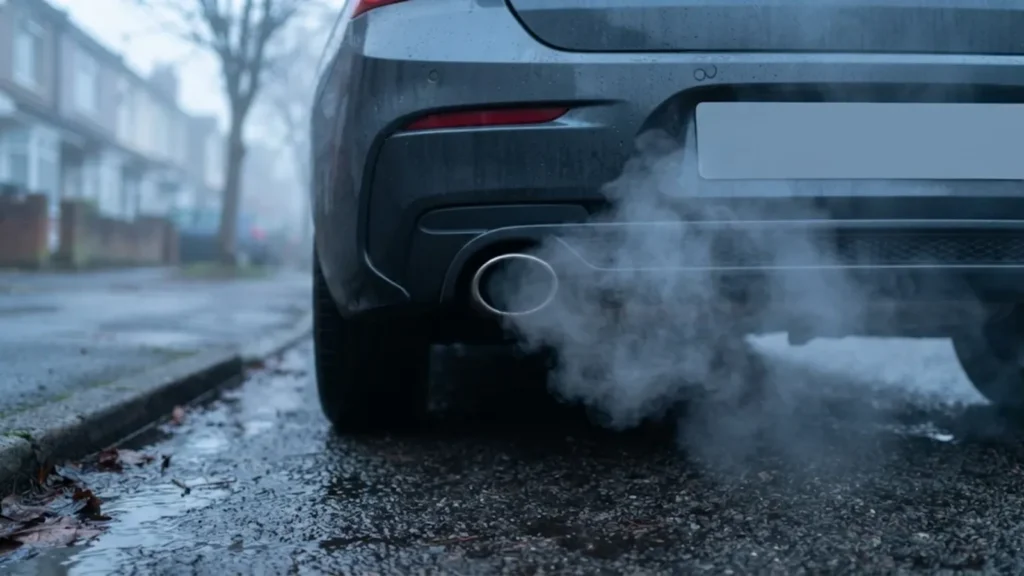
White, blue or black smoke from your exhaust? Learn what each colour usually means, when it is normal condensation and when smoke could mean an MOT failure.
The colour of exhaust smoke is a useful clue to what is happening inside the engine. Thin white vapour on a cold morning is usually harmless condensation. Blue smoke normally means the engine is burning oil. Black smoke suggests too much fuel is being burned. Thick white smoke that does not clear once the engine is warm can point to coolant entering the engine, which needs prompt attention.
White smoke or vapour
When it is normal
On cold or damp days, it is normal to see thin white vapour from the exhaust when you first start the engine. This is water vapour condensing in the cold exhaust, and it should disappear within a few minutes as the system warms up. You may also see a few drips of water from the tailpipe.
When it is a concern
Thick, persistent white smoke that continues after the engine is warm can mean coolant is being burned in the engine. Other warning signs include a sweet smell, a coolant level that keeps dropping, the engine running hot or a milky residue under the oil filler cap. Possible causes include a failed head gasket or a cracked cylinder head. Stop driving and get the car checked, because continuing can cause serious engine damage. Our article on coolant loss and pressure testing explains how leaks are traced.
Blue or grey-blue smoke
Blue smoke usually means engine oil is getting into the combustion chamber and being burned. You might notice it most on start-up, when accelerating after idling, or when lifting off the throttle. Common causes include:
- worn valve stem seals or piston rings, more likely on older, high-mileage engines
- a turbocharger with worn seals, on turbocharged engines
- overfilling the engine with oil
- a fault with the crankcase ventilation system
Check the oil level with the dipstick. If you are topping up often, or the level is above the maximum mark, have it looked at. Our guide to checking your engine oil level shows how to do it properly.
Black smoke
Black smoke means the engine is burning more fuel than it should, or not burning it completely. It is more common on diesel engines. Typical causes include:
- a blocked air filter restricting airflow
- faulty or leaking fuel injectors
- a fault with the turbocharger or its pipework
- a faulty sensor sending wrong information to the engine management system
- a problem with the exhaust gas recirculation (EGR) valve or diesel particulate filter
A small puff of dark smoke under hard acceleration on an older diesel can be normal, but regular or heavy black smoke is not. If your diesel also shows a DPF warning, see our guide to blocked DPF symptoms.
Seeing smoke you can’t explain?
Enter your car registration and postcode to get an instant quote. Every job comes with a 12-month parts and labour warranty from the mechanic who does the work.
Will exhaust smoke fail an MOT?
It can. The DVSA MOT inspection manual says that once the engine’s idle speed has stabilised, the tester assesses the smoke from the tailpipe. A vehicle emitting dense blue or clearly visible black smoke will fail. Exhaust emissions are also measured as part of the test, and missing or obviously modified emissions control equipment is a major defect.
If you have noticed smoke, it is sensible to get the cause diagnosed before your MOT at an approved MOT test centre.
Quick guide to exhaust smoke colours
- Thin white vapour that clears in a few minutes: usually condensation. Normal in cold or damp weather.
- Thick white smoke that does not clear: possible coolant burning. Stop and get it checked.
- Blue or grey-blue smoke: oil burning. Check the oil level and book a diagnosis.
- Black smoke: too much fuel or incomplete burning. Check the air filter and book a diagnosis.
Getting it diagnosed
A mechanic will check fluid levels, read fault codes, look at the air intake, turbocharger and fuel system, and may carry out a compression or cooling system pressure test depending on the colour of the smoke. A diagnostic inspection is usually the best first step, and some causes are dealt with by exhaust repairs or routine servicing.
Frequently asked questions
Is white smoke from the exhaust normal?
Thin white vapour on a cold start that clears within a few minutes is normal condensation. Thick white smoke that continues once the engine is warm is not, and should be checked.
What does blue smoke from the exhaust mean?
Blue smoke usually means the engine is burning oil. Common causes are worn seals, worn piston rings, a turbocharger fault or too much oil in the engine.
Why is my diesel blowing black smoke?
Black smoke means too much fuel or incomplete burning. A blocked air filter, faulty injectors, turbo problems or a faulty sensor are common causes.
Can I pass an MOT with smoke from the exhaust?
Dense blue or clearly visible black smoke at idle is a fail under the MOT inspection manual, and the emissions must be within limits. Get any smoke diagnosed before the test.
Image: AI-generated illustration.