
Blocked DPF Symptoms: How to Identify the Problem and Choose the Right Repair
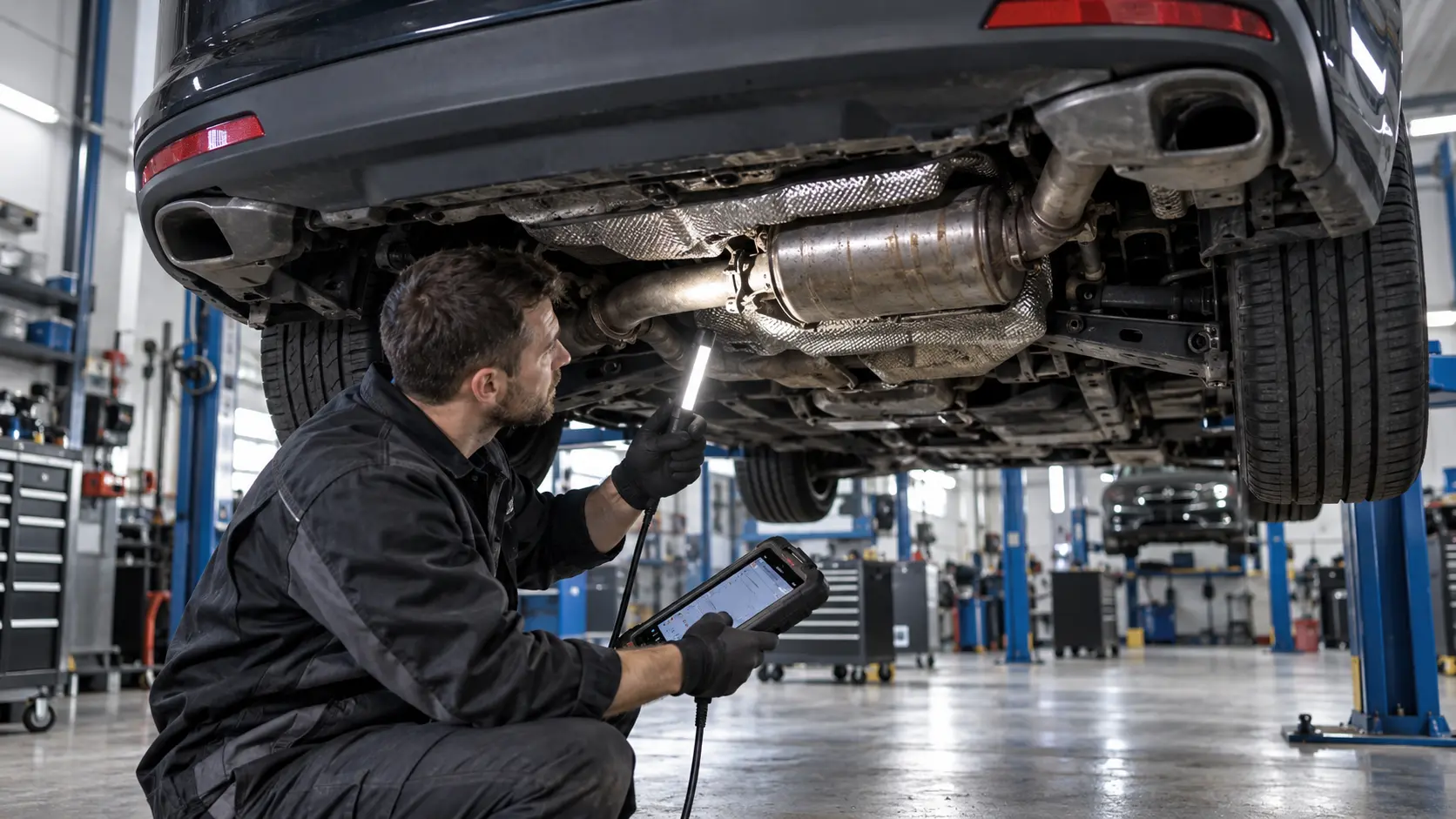
DPF warning light on? Learn the signs of a blocked diesel particulate filter, why regeneration may fail and when your car needs professional diagnosis.
A blocked diesel particulate filter (DPF) can cause a warning light, reduced power, frequent regeneration attempts and higher fuel consumption. Those symptoms do not prove that the filter itself needs replacing: a sensor, engine fault, interrupted regeneration, ash build-up or physical damage can produce similar warnings. Diagnosis should come before choosing cleaning, regeneration or replacement.
This guide explains the common blocked DPF symptoms, when a manufacturer-approved regeneration drive may help and when you should stop driving and arrange professional assistance.
What is a DPF and why can it become blocked?
A diesel particulate filter captures soot from the exhaust of a diesel vehicle. The vehicle normally removes accumulated soot through regeneration, when the exhaust reaches suitable conditions for the soot to burn.
Regeneration does not burn away non-combustible ash. A warning light also cannot identify the exact cause of the problem, so soot, ash, contamination and physical damage need to be distinguished.
| What has accumulated? | What it may mean |
|---|---|
| Soot | Regeneration may remove it if the vehicle and filter are otherwise suitable. |
| Ash | Normal regeneration cannot burn it away; specialist cleaning or replacement may be needed. |
| Oil or other contamination | The underlying engine fault must be investigated. |
| Physical damage | A cracked or melted filter cannot be repaired by cleaning. |
Six possible blocked DPF symptoms
1. DPF warning light or message
Some vehicles show a dedicated DPF light; others display a message that regeneration has not completed. Read the exact warning and check the vehicle handbook. A regeneration instruction is different from a warning accompanied by severe power loss, overheating or other engine lights.
2. Sluggish acceleration
A restricted exhaust can affect performance, especially uphill, but turbocharger, intake, fuel-system and sensor faults can feel similar. Reduced performance is a reason to investigate, not proof that the DPF needs replacing.
3. Higher fuel consumption
Frequent active regeneration can use additional fuel. Increased consumption can also have other causes, so mention this symptom alongside the DPF warning when booking an inspection.
4. Frequent or unsuccessful regeneration
A higher idle speed, cooling fans running or a temporary change in fuel consumption can occur during regeneration. Repeated unsuccessful attempts may indicate that regeneration is being interrupted or prevented by another fault.
5. Reduced-power or limp mode
Some vehicles limit engine performance when a significant fault is detected. A restricted DPF is one possible cause, but fault codes and live data are needed to establish what is happening.
6. Unusual exhaust smell or smoke
Excessive smoke or a changed exhaust smell can indicate combustion, exhaust or emissions-control problems. It does not automatically prove a blocked DPF. Heavy smoke, poor running or several warning lights should be professionally diagnosed.
Why does a DPF keep blocking?
- Interrupted regeneration: frequent short journeys may make it difficult for some vehicles to complete their designed process.
- Engine or emissions faults: injection, intake, EGR or other faults may increase soot or inhibit regeneration.
- Sensor or wiring faults: incorrect pressure or temperature data can prevent correct DPF management.
- Ash accumulation: ash gradually reduces available filter capacity and cannot be burned away.
- Incorrect oil specification: follow the manufacturer's required oil specification rather than choosing by viscosity alone.
Can a motorway drive clear a blocked DPF?
Sometimes, but only when the manufacturer recommends a driving-based regeneration procedure and the vehicle is otherwise operating normally. Conditions vary by model, so there is no universal speed or journey duration.
Do not attempt a regeneration drive if the car has severe power loss, overheating, abnormal engine operation or a warning telling you to stop. If the warning remains after following the handbook, arrange diagnosis rather than repeating the drive indefinitely.
What happens during a professional DPF diagnosis?
- Reading stored fault codes and relevant live engine data.
- Checking DPF pressure and temperature information.
- Assessing whether regeneration has been interrupted or inhibited.
- Inspecting sensors, wiring and exhaust components.
- Investigating engine faults that may be producing excessive soot.
- Assessing whether regeneration, cleaning or replacement is appropriate.
A DPF pressure or efficiency fault code does not automatically prove that the filter has failed. A damaged sensor hose or incorrect sensor reading may create a similar result.
Regeneration, cleaning or replacement: what is the difference?
| Option | When it may be considered | Limitation |
|---|---|---|
| Normal regeneration | Soot accumulation where the vehicle can safely complete its designed process. | Does not remove ash or repair an underlying fault. |
| Workshop-controlled regeneration | Certain soot-loading conditions where the manufacturer permits it. | May be unsuitable if restriction or other faults are severe. |
| Specialist cleaning | A serviceable filter with deposits that an appropriate method can remove. | Cannot repair a cracked or melted substrate. |
| Replacement | A damaged, unserviceable or excessively contaminated filter. | The original cause still needs to be addressed. |
Is forced regeneration always the answer?
No. A workshop-controlled regeneration raises exhaust temperatures and should only be performed when the vehicle meets the manufacturer's conditions. A mechanic should assess the vehicle first.
Can cleaning restore a damaged filter?
Cleaning may remove deposits from a serviceable filter, but it cannot repair a cracked substrate, melted internal structure or damaged housing.
Can a blocked DPF damage the engine?
A severely restricted DPF can increase exhaust backpressure and interfere with engine operation. Repeated regeneration attempts may also contribute to fuel dilution of the engine oil on some vehicles.
A rising oil level or unusual diesel smell in the oil needs attention. If the oil is above the manufacturer's maximum mark, do not attempt to solve the issue with a regeneration drive; arrange an inspection and follow the handbook.
How much does DPF cleaning cost in the UK?
There is no single price for every DPF problem. Cost depends on the vehicle, the cause, diagnosis, removal and refitting, cleaning or replacement, and any additional repairs.
Before approving work, ask what has been diagnosed and exactly what the quote includes. Cleaning will not solve a failed sensor, damaged filter or engine fault that continues to produce excessive soot.
Is it legal to remove a DPF in the UK?
A DPF fitted as part of the vehicle's original emissions-control system should not be removed to eliminate a warning light. Removing emissions equipment can make a vehicle unlawful for road use and can result in an MOT failure. Arrange an appropriate repair instead.
How can you reduce future DPF problems?
- Follow the manufacturer's servicing schedule and oil specification.
- Investigate engine warning lights, abnormal smoke and performance problems promptly.
- If most journeys are short, read the handbook for any manufacturer-recommended regeneration guidance.
- If the warning returns after cleaning or regeneration, investigate the underlying cause before repeating the same procedure.
Frequently asked questions
Will a blocked DPF clear itself?
Some vehicles can remove soot through normal regeneration when the required conditions are met. A severely restricted, damaged or ash-loaded filter may need professional attention.
Can I keep driving with the DPF warning light on?
Follow the warning message and handbook. Significant power loss, overheating, abnormal operation or a stop warning means you should pull over safely and arrange assistance.
Does a blocked DPF always need replacing?
No. The correct repair depends on soot loading, ash, filter condition and underlying faults.
Can a faulty EGR valve cause DPF problems?
An EGR fault can affect combustion and emissions operation, but it must be confirmed through diagnosis rather than assumed from a DPF warning.
Will a DPF additive fix a blocked filter?
An additive is not a guaranteed repair and cannot fix damaged components, failed sensors or every type of deposit. Follow manufacturer guidance.
Why did the warning return after cleaning?
The original engine or sensor fault may still be present, the cleaning may not have been suitable, or the filter may be damaged or ash-loaded. Further diagnosis is needed.