
Radiator Cap Symptoms: Coolant Loss, Overheating and Pressure Testing
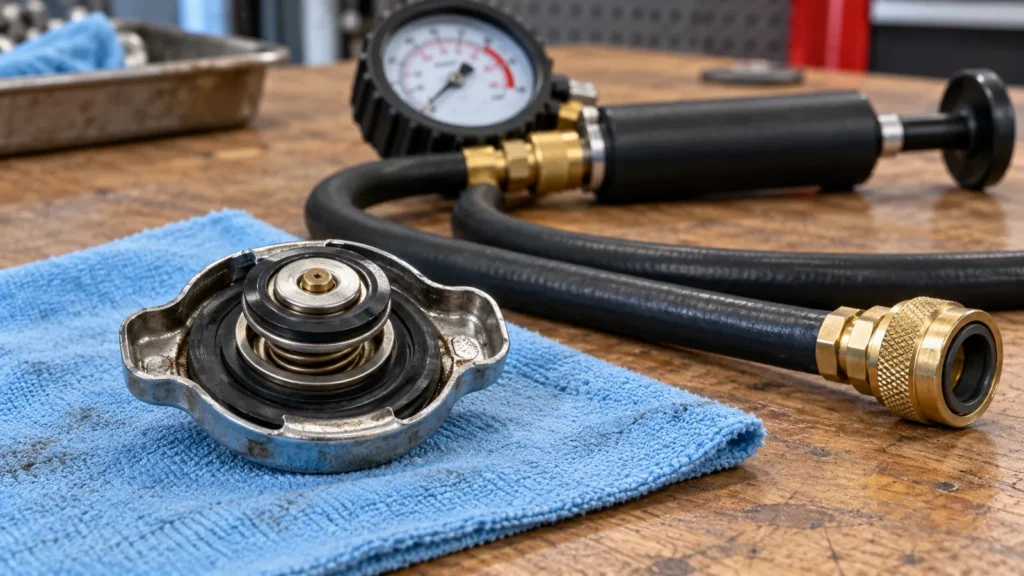
Losing coolant or overheating? Learn how radiator and expansion tank caps are checked, why cap and system pressure tests differ, and when to stop driving.
A faulty radiator cap or pressurised expansion tank cap can contribute to coolant loss and overheating, but the symptoms alone do not prove the cap is to blame. Testing the cap separately from the cooling system helps distinguish a cap fault from a leak elsewhere.
The cap is more than a lid: it controls the system's operating pressure. On many cars the pressure cap is on an expansion tank rather than the radiator itself. A simple overflow bottle may have a different, non-pressurised lid, so identify the correct part before arranging a test.
Never remove a radiator or coolant pressure cap while the engine is running or the cooling system is hot. Hot coolant and steam can escape forcefully. If the car overheats, stop safely, switch off and arrange help rather than continuing your journey.
Coolant disappearing? Find the cause
Explain any overheating warning, fluid loss or recent cooling-system work when booking an inspection.
What are the symptoms of a faulty radiator cap?
Coolant loss, deposits around the filler opening or trouble maintaining the correct pressure are reasons to inspect the cap and the neck it seals against. A damaged seal, defective valve or incorrect cap rating can affect operation. Gates also notes that cap faults can be associated with collapsed hoses.
These are clues, not a diagnosis. A stain may be left by a previous spill, and coolant escaping near a cap may reflect another problem. Describe what happens when the engine warms up and whether the cold level repeatedly falls; do not open a hot system to investigate.
An overheating car needs a broader check. A technician may need to assess coolant circulation, cooling-fan operation, hoses and other components. Replacing an inexpensive cap without establishing the fault can delay the repair the car actually needs.
How is a radiator cap tested?
A cap test checks the cap; a cooling system pressure test checks the circuit. They answer different questions. Ask which test was performed rather than treating “pressure tested” as proof that both have passed.
1. Identify the correct specification
The technician checks the vehicle's required cap type and pressure rating. There is no universal test pressure for every car. A cap that physically fits is not necessarily suitable, and choosing a higher pressure rating is not an upgrade.
2. Inspect the cap and sealing neck
With the system cold and safe, the cap can be removed and inspected. Cracked or hardened seals, damaged locating features and a damaged tank or filler neck need attention. A sound cap cannot make a poor sealing surface disappear.
3. Test the cap separately
A suitable cap adaptor connects it to a professional tester. Its pressure-holding and valve behaviour are assessed against the correct specifications and equipment instructions. Gates recommends replacing a defective cap and checking the radiator or expansion tank for damage too.
4. Pressure-test the cooling circuit
The correct adaptor is fitted to the system and a controlled pressure applied according to the vehicle's procedure. The technician checks the gauge and looks for escaping coolant. Suitable eye protection, secure fittings and controlled pressure release are essential.
Laser Tools' tester instructions emphasise using the correct adaptor and consulting the vehicle workshop manual. This is a workshop overview, not an instruction to connect compressed air to your coolant tank or guess a pressure from an online video.
What if the test does not find an obvious leak?
A pressure drop needs investigating; it does not automatically mean a head gasket failure. The test connection itself must be sound, and the inspection needs to establish where coolant or pressure is being lost.
Likewise, a satisfactory cold test does not explain every temperature-related or intermittent complaint. Tell the workshop if the problem appears only after a long drive, under load or after recent repairs. Further checks should follow the symptoms and vehicle's repair information rather than repeated parts replacement.
If the oil level is also rising, mention it before the car is run again. Our rising engine oil level guide explains why fuel dilution and coolant contamination need different investigations.
What matters when replacing a radiator cap?
Use the specified cap, including its pressure rating and sealing arrangement. Ask whether the tank or filler neck also needs repair and whether the original coolant-loss complaint has been rechecked afterwards.
Coolant must meet the vehicle's specification too. Do not select it by colour alone, mix unidentified products or overfill the reservoir. For a normal level check, use the handbook's cold-check procedure and marks. Read our fluid levels guide for broader routine checks.
Common questions
Can a radiator cap cause overheating?
Yes, a cap fault can compromise pressure control, but it is one possible cause. Overheating still needs diagnosis.
Can I keep driving if topping up stops the warning?
A top-up does not repair the leak or establish safe operation. Repeated coolant loss or overheating needs prompt attention; stop safely if the temperature warning returns.
Should I replace the cap first because it is cheap?
A confirmed defective cap should be replaced. Price alone is not evidence that it caused the problem, and it is not a reason to ignore the rest of the system.
Get recurring coolant loss investigated
Review diagnostic inspection options and describe the symptoms before agreeing repair work.
Book it with HON CAR SERVICE
Explore diagnostic inspection and car servicing. Online booking is available 24/7; telephone enquiries are Monday–Friday, 08:00–18:00 UK time.
Start your bookingRelated articles
- Engine oil level rising: causes and next steps
- Checking car fluid levels at home
- Car broken down? Put safety first
Technical sources
- Gates TechZone: radiator cap function test.
- Laser Tools: radiator pressure tester instructions (equipment context; follow your vehicle's current cold-system safety procedure).
- Ford owner's manual: coolant checking, specifications and overheating precautions (model-specific example).
Coolant problems can also show up as a car heater blowing cold air or as thick white exhaust smoke.
Always follow the instructions for your own vehicle. Hero image: AI-generated illustration of a radiator cap and testing equipment, not a customer repair photograph.