
Brake Pads Replacement: Warning Signs, the Job and Aftercare
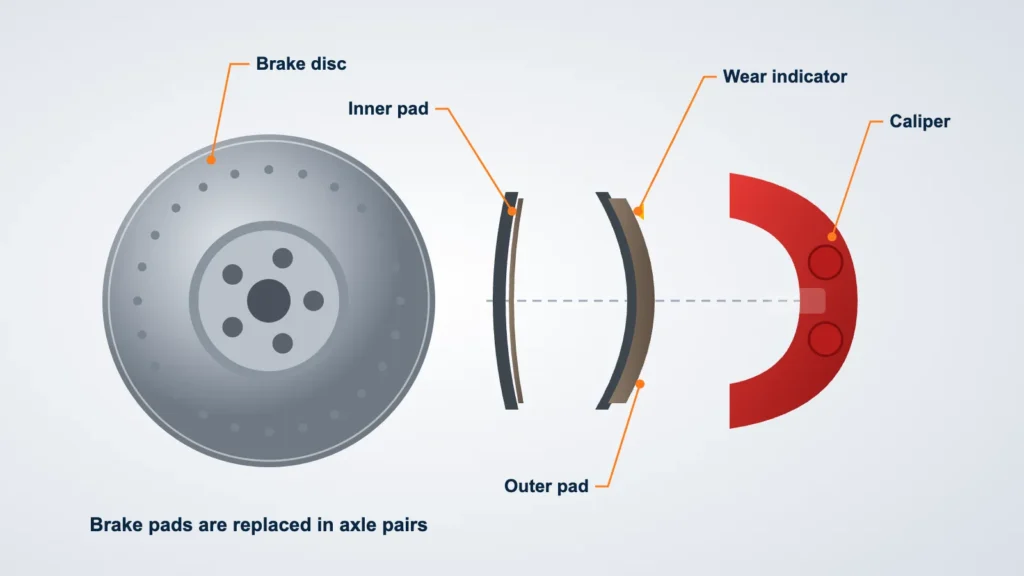
Spot the signs you need a brake pads replacement, see what the job involves step by step, and learn how to look after new pads.
You usually need a brake pads replacement when you hear squealing or grinding, see a pad wear warning light, or notice the car takes longer to stop or pulls to one side. Pads are always replaced in axle pairs, and a good technician will check the discs, calipers and brake fluid at the same time. Knowing the signs, and what the job actually involves, helps you act early and judge whether the work quoted is sensible.
This guide covers the warning signs to look out for, what happens step by step when pads are changed, how pads and discs differ, and what to do in the days after the work.
Warning signs your brake pads are wearing out
Brake pads wear gradually, so the change can be easy to miss. Watch and listen for these signs:
- High-pitched squeal when braking: many pads have a small metal wear indicator that touches the disc when the friction material is getting thin.
- Grinding or scraping: this can mean the pad material has worn through and metal is rubbing on the disc. Treat it as urgent.
- Pad wear warning light: some cars have an electronic sensor that lights a symbol on the dashboard. Amber means get it checked soon; a red brake light means stop safely.
- Longer stopping distances: the car feels less sharp, or you press the pedal further than usual.
- Pulling to one side: uneven pad wear or a sticking caliper can make the car veer under braking.
- Vibration through the pedal or steering wheel: often a sign of uneven or worn discs rather than pads alone.
If you are not sure what a sound means, our guide to squeaking or grinding brakes explains the common causes, and signs your brakes need immediate attention covers when you should stop driving.
What a brake pads replacement involves, step by step
On most cars, a brake pads replacement is a routine job that a qualified mechanic can complete at a garage or on your driveway. The broad steps are:
- Safe lifting: the car is raised and supported on stands, and the wheels on the axle being worked on are removed. You will need your locking wheel nut key if the car has one.
- Inspection: the mechanic measures the remaining pad material and checks the disc surface and thickness.
- Removing the old pads: the caliper is unbolted or swung away so the worn pads can come out.
- Retracting the piston: the caliper piston is pushed back to make room for thicker new pads. Some rear calipers with an electronic parking brake need a diagnostic tool to put them into service mode first.
- Cleaning and lubricating: the pad carriers and slide pins are cleaned and lightly greased so the pads move freely.
- Fitting the new pads: new pads, plus any clips or wear sensors, are fitted and the caliper is refitted and tightened correctly.
- Pumping the pedal and testing: the pedal is pressed until it feels firm, then the brakes are tested before the car is handed back.
Why pads are replaced in axle pairs
Pads are always changed in pairs on the same axle, so both front wheels or both rear wheels. Fitting new pads on one side only would give uneven braking force and could make the car pull. Many technicians recommend replacing pads when around 3mm of friction material remains.
Brake pads or discs: what is the difference?
Pads and discs work together, but they wear at different rates. The table below sets out how to tell which part needs attention.
| Part | What it does | Typical signs of wear | When it is replaced |
|---|---|---|---|
| Brake pads | Friction material that presses on the disc | Squeal, wear light, thin material | When the material is low, in axle pairs |
| Brake discs | Metal rotor the pads clamp onto | Vibration, deep grooves, a lip on the edge | Below minimum thickness or badly scored |
| Calipers | Hold the pads and push them onto the disc | Pulling, a hot wheel, uneven pad wear | When sticking, leaking or seized |
| Brake fluid | Transfers pedal pressure to the calipers | Spongy pedal, low level, old fluid | Commonly about every 2 years |
Discs usually last longer than pads, but not forever. If the discs are worn, scored or below the minimum thickness, new pads on old discs will not bed in properly. Our guide on how long brake pads and discs last explains this in more detail.
Get a fixed price for new pads, fitted at your home or work or at a trusted local garage, with live photo updates.
Checks worth doing at the same time
When the wheels are off, it makes sense to look at the rest of the braking system. Ask the mechanic to report on:
- Brake fluid: the level and condition. Brake fluid absorbs moisture over time and is commonly changed about every 2 years, but follow your manufacturer's schedule.
- Calipers and slide pins: a sticking caliper wears pads unevenly and can overheat. See our guide to brake caliper problems.
- Brake hoses and pipes: cracks, bulges, corrosion or signs of leaks.
- The other axle: front pads usually wear faster than rear pads, but both ends should be measured.
With Hon Car Service, any extra work found is shown to you with photos, and nothing goes ahead until you approve it. Your card is authorised at booking and only charged once the work is done and approved.
Aftercare: the first few hundred miles
New pads need bedding in so they mate properly with the disc surface. For the first couple of hundred miles, avoid harsh braking where it is safe to do so, unless the pad maker gives different advice. A slight change in pedal feel or a faint noise at first can be normal, but a soft pedal, a burning smell, grinding or pulling is not, and should be checked straight away. Our guide to bedding in new brake pads explains what to expect.
If you are searching for car repair near me, you can book a mobile mechanic at home or work, or a garage drop-off, across the UK, including Southampton, Eastleigh and Totton.
Frequently asked questions
How long does a brake pads replacement take?
On many cars, one axle can be done in around an hour, although it depends on the car and whether discs or other parts are also being replaced. Electronic parking brakes can add time.
Can I replace the pads on just one wheel?
No. Pads are replaced in axle pairs, both fronts or both rears, so the braking force stays even on each side.
Do I always need new discs with new pads?
Not always. If the discs are above the minimum thickness and in good condition, new pads alone may be enough. The mechanic should measure them and show you before recommending new discs.
Is it safe to drive with the pad warning light on?
An amber pad wear light means book a check soon. If you also hear grinding, notice the car pulling, or see a red brake warning light, stop when it is safe and get help.
Enter your registration and postcode for a fixed price, with parts and labour included.