
How Long Do Brake Pads and Discs Last?
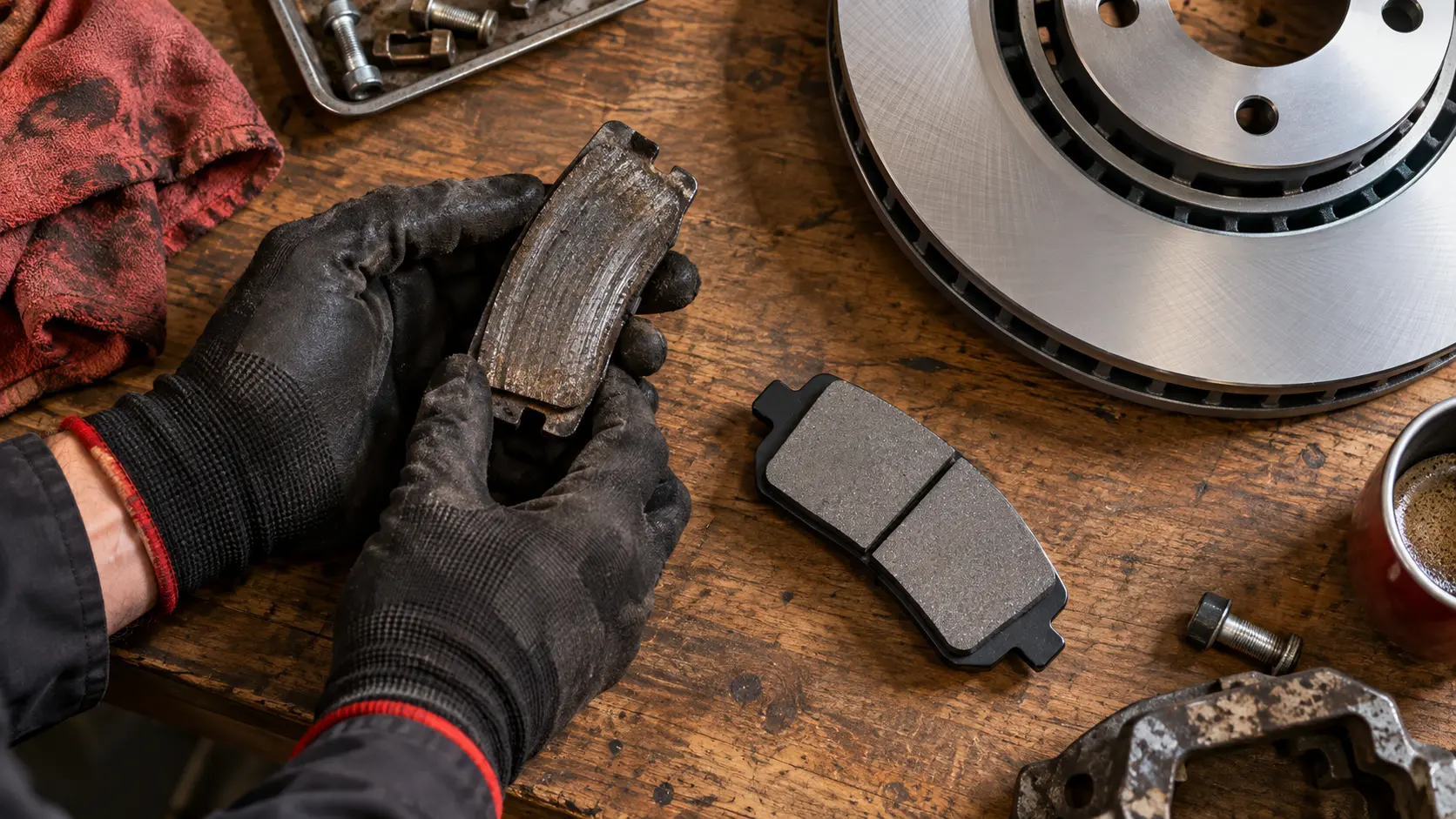
Find out what affects brake pad and disc wear, how to recognise brake problems and when to arrange a professional brake inspection.
How Long Do Brake Pads and Discs Last? Signs It Is Time for a Brake Check
Brake pads and discs wear down as they work together to slow your car. There is no mileage figure that tells every driver exactly when to replace them: a vehicle used mainly for short journeys with frequent stops may wear its brakes differently from one driven mostly on open roads.
The most reliable way to assess brake condition is to inspect the components and compare their measurements with the vehicle manufacturer’s specifications.
Why brake wear varies
Several factors affect how quickly your brakes wear:
Driving conditions. Frequent braking in traffic, on steep roads or while carrying heavy loads can increase wear.
Driving habits. Repeated hard braking can place greater demands on the braking system than smooth, anticipated stops.
Vehicle weight and design. A heavier vehicle may place different demands on its brakes. Hybrid and electric vehicles may use regenerative braking, but their friction brakes still need inspection and maintenance.
Mechanical condition. A sticking brake calliper or worn sliding mechanism can cause a pad to wear unevenly or remain in contact with the disc.
Signs your brakes need attention
A change in braking performance deserves attention even if no dashboard warning light appears.
You may notice a scraping or grinding sound, a brake pedal that feels different from usual, vibration when slowing down, or the car pulling to one side during braking. Some brake pads have wear indicators that produce a noise or trigger a dashboard message.
These symptoms do not all point to the same fault. For example, vibration can have several causes, while pulling under braking may be linked to a calliper, tyre or suspension issue. A proper inspection is needed before deciding which parts to replace.
If braking performance has deteriorated, the pedal feels unusually soft, or the car is difficult to control, stop somewhere safe and arrange professional assistance rather than continuing to drive.
Do brake pads and discs always need replacing together?
Not necessarily. Brake pads may need replacement while the discs remain within their permitted thickness and condition limits.
Discs may also need replacement if they are excessively worn, cracked or otherwise unsuitable for continued use. The mechanic should inspect both sides of the braking system and check the manufacturer’s limits before recommending the work.
Brake pads are generally replaced as an axle set, rather than fitting a new pad to just one wheel.
Can an MOT tell me how much life is left in my brakes?
An MOT assesses braking performance and checks relevant components against test standards. It is not a full brake maintenance inspection, and an MOT pass does not tell you exactly how many miles your pads or discs have left.
If you want to know whether replacement is approaching, ask for a brake inspection that includes measurements and a check for uneven wear.
How can I help my brakes last longer?
Leave enough distance from the vehicle ahead, anticipate traffic and avoid unnecessary harsh braking. Follow the manufacturer’s maintenance schedule and have unusual noises or changes in braking investigated promptly.
Need a brake inspection or replacement?
Visit HON CAR SERVICE to arrange brake-related work. A diagnosis of the fault can help establish whether your car needs pads, discs or another repair.