
Brake Caliper Problems: How to Recognise a Fault Before It Gets Worse
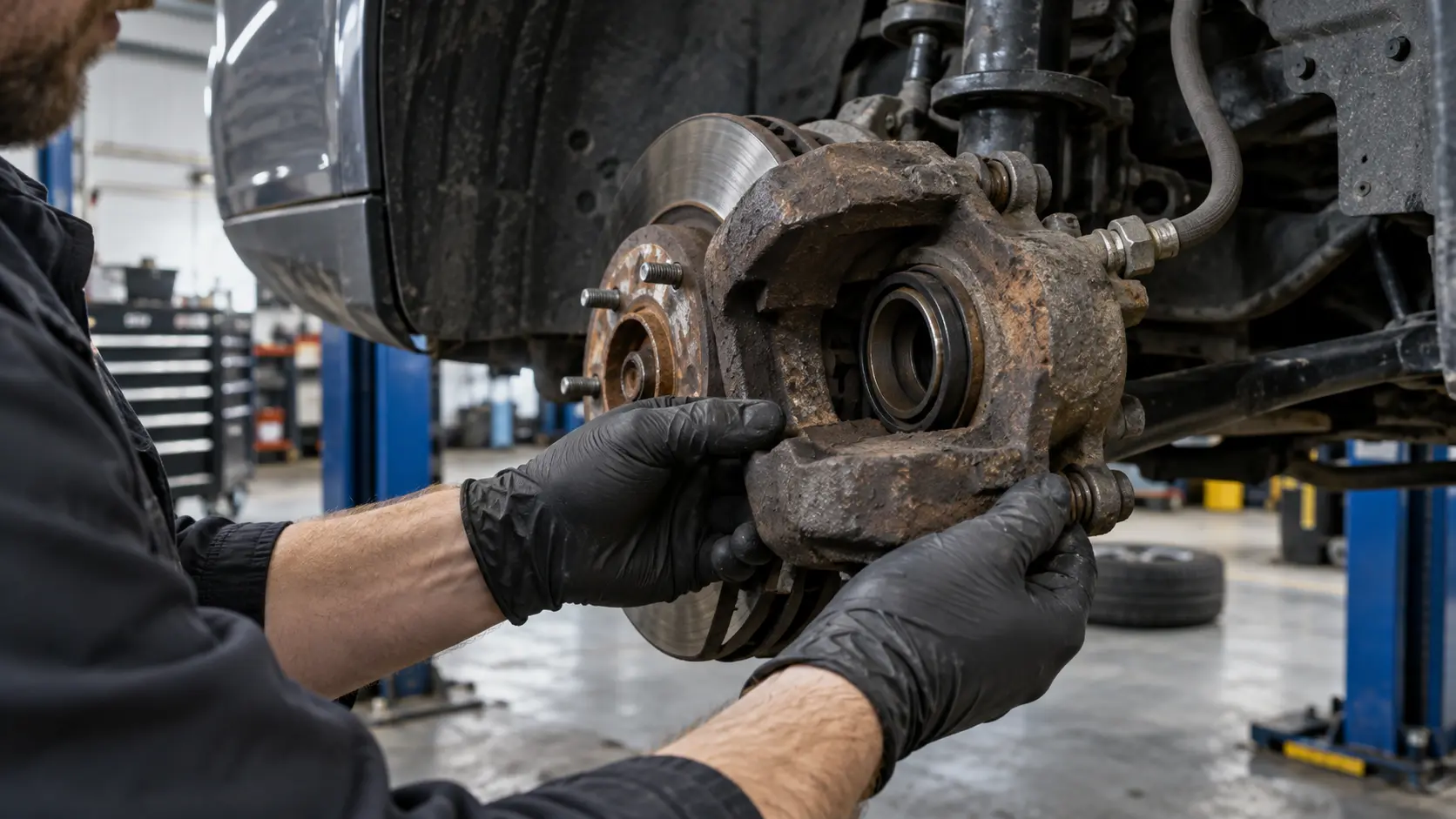
Learn what brake calipers do, how to recognise a sticking or seized caliper and when to arrange a professional brake inspection.
Brake Caliper Problems: Symptoms, Causes and Repair Options
Your brake pads and discs do not work alone. On a vehicle with disc brakes, the brake caliper applies the force needed to press the pads against the rotating disc and slow the wheel.
When a caliper does not release or apply pressure correctly, the effects can extend beyond the caliper itself. The pads may wear unevenly, a wheel may become unusually hot, and the vehicle’s braking performance may change.
How does a brake caliper work?
When you press the brake pedal, hydraulic pressure moves one or more pistons inside the caliper. The pistons push the brake pads against the disc, creating friction that slows the wheel.
When you release the pedal, the pads should stop applying significant pressure to the disc. The exact mechanism depends on whether the vehicle uses a floating or fixed caliper design.
What does a seized brake caliper feel like?
A caliper can stick in a position that prevents the brake from releasing properly or stops it from applying sufficient force. Possible symptoms include:
- The car pulling to one side when braking.
- One wheel becoming much hotter than the others.
- A burning smell after driving.
- Uneven brake pad wear.
- A scraping noise or a wheel that feels resistant to turning.
- Reduced braking performance or an unusual brake pedal feel.
These symptoms are not exclusive to caliper faults. A damaged brake hose, parking brake mechanism or another braking component may produce similar effects.
What causes a caliper to stick?
Corrosion, damaged piston seals, contaminated sliding pins and deteriorated rubber components can interfere with normal caliper movement.
On some vehicles, a fault in the electronic parking brake or its associated mechanism can also cause a rear brake to remain applied.
A mechanic should establish the cause before replacing parts. Fitting a new caliper without addressing an underlying hydraulic or mechanical fault may not solve the problem.
Does a faulty caliper always need replacing?
Not necessarily. Depending on the caliper design and the fault, a suitable repair may be possible. In other cases, replacement is the appropriate option.
The mechanic should also inspect the brake pads, disc and related components for heat damage or abnormal wear. A caliper fault may have affected parts that would otherwise have remained serviceable.
Is it safe to drive with a sticking brake?
Do not continue driving if a brake is dragging heavily, a wheel is overheating, the vehicle pulls severely under braking or braking performance has deteriorated. Stop somewhere safe and arrange recovery or professional assistance.
Book a brake inspection
If you suspect a brake caliper problem, visit HON CAR SERVICE to arrange a diagnosis and discuss the necessary repairs.