
Brakes Squeaking or Grinding? What It Means and When to Get Them Checked
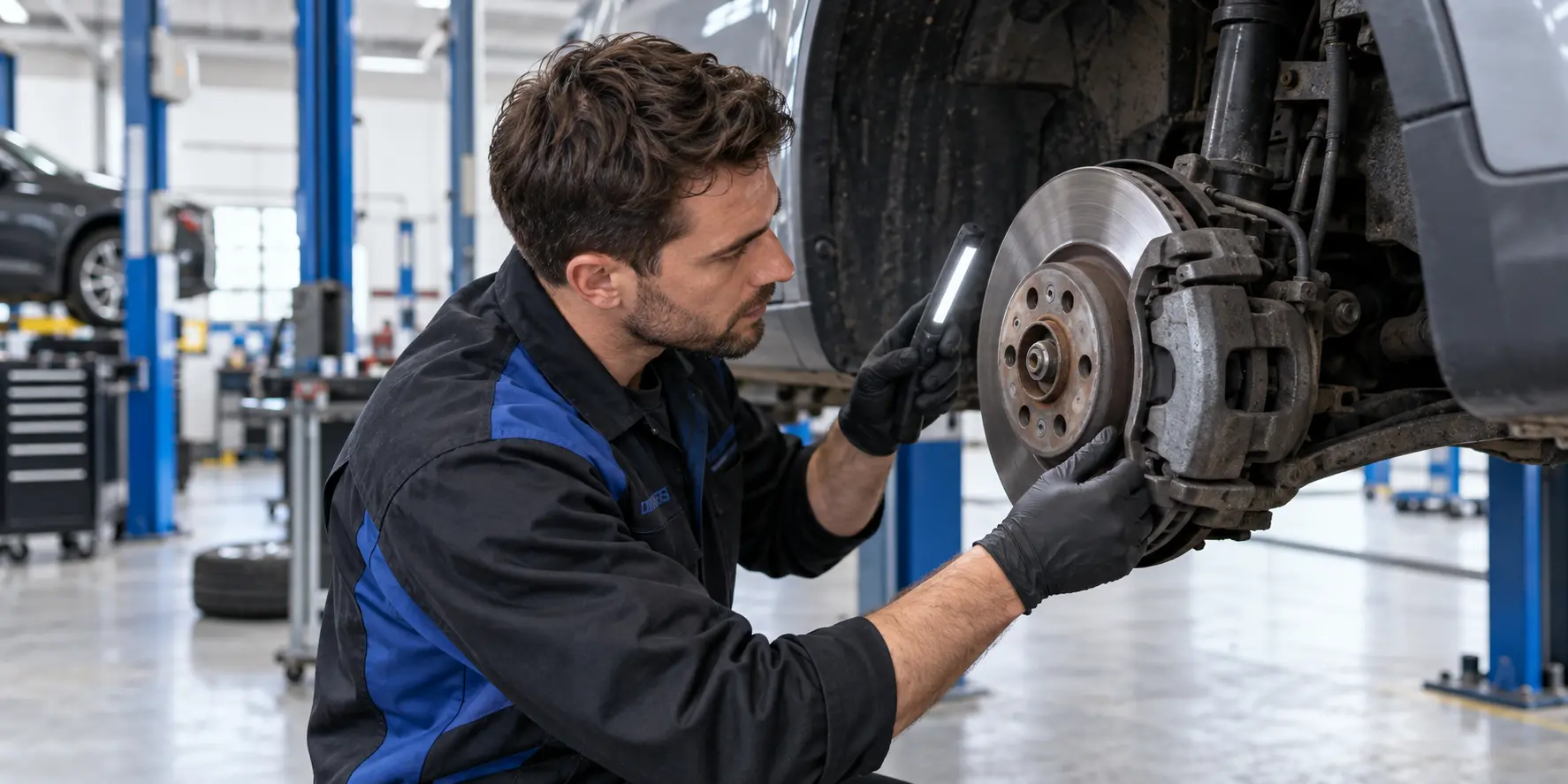
Squeaking, squealing or grinding brakes? Learn what each noise usually means, which ones are safe to monitor and which need checking straight away, plus what a brake inspection involves.
Brakes are meant to be quiet. When they start squeaking, squealing or grinding, your car is often telling you something has changed. Some noises are harmless and go away on their own, while others mean the brakes are worn and need attention soon.
This guide explains what each sound usually means, how urgent it is, and what to do next.
Enter your registration and postcode to get a fixed-price quote for a brake check, pads or discs.
Brake noises at a glance
| Noise | Likely cause | How urgent? |
|---|---|---|
| Light squeak on the first few stops, especially when damp | Surface rust on the discs | Usually harmless if it fades after a few miles |
| High-pitched squeal on most stops | Pad wear indicator touching the disc | Book a brake check soon |
| Squeal after heavy braking | Glazed pads or discs | Get it checked at your next opportunity |
| Grinding or metal-on-metal scraping | Pads worn to the backing plate, debris or a sticking caliper | Get the brakes checked as soon as possible |
| Any noise with a warning light, soft pedal, vibration or pulling | A brake fault affecting stopping power | Stop when safe and get help |
Why do brakes squeak?
Surface rust after rain or overnight. Brake discs are bare metal, so a thin layer of rust forms quickly in damp UK weather. The first few stops wipe it away, which can cause a short squeak or light scraping sound. If the noise fades after a few miles, it is normally nothing to worry about.
Worn brake pads and wear indicators. Many brake pads have a small metal tab that touches the disc when the pad material gets thin. It squeals on purpose, so you know the pads need replacing. If the squeal happens on most stops and does not go away, it is time for an inspection.
Glazed pads or discs. Heavy or repeated braking, for example on long hills or in stop-start traffic, can overheat the pads and leave a hard, shiny surface. Glazed pads grip less well and often squeal.
Dust, dirt or missing parts. Brake dust, grit or small stones can get trapped between the pad and the disc. Missing anti-squeal shims or dry slider pins can also make the pads vibrate. These are usually simple fixes, but they still need checking.
Why do brakes grind?
Grinding is more serious than squeaking. It usually means one of these:
- Pads worn to the metal: the friction material has gone and the backing plate is rubbing on the disc, which damages the disc quickly and reduces braking performance.
- A stone or debris stuck in the brake: this can cause a constant scraping noise, even when you are not braking.
- Badly worn or scored discs: deep grooves or a large lip on the edge of the disc can cause grinding and vibration.
- A sticking brake caliper: the pad stays in contact with the disc, causing noise, heat and sometimes a burning smell.
Worn pads replaced early are usually a much smaller job than pads and discs replaced later, so do not wait for grinding to get worse.
Other warning signs to look out for
- The brake pedal feels soft, spongy or goes further down than usual
- The steering wheel or pedal vibrates when braking
- The car pulls to one side under braking
- A burning smell after driving
- The brake warning light stays on
- One wheel is much dirtier with brake dust than the others
Brakes are a key part of the MOT. The GOV.UK MOT inspection manual sets out the brake checks, and worn pads, damaged discs or brake faults can lead to a failure.
What does a brake inspection involve?
A mechanic will usually remove the wheels and check:
- Pad thickness on every wheel
- Disc condition, thickness and any scoring or lip
- Calipers and slider pins for sticking or seized parts
- Brake hoses and pipes for leaks or damage
- Brake fluid level and condition
You should then get a clear explanation of what needs doing now, what can wait, and the cost before any work starts. Our brake pads replacement page explains the booking options.
Can I just drive on it?
A short squeak on a damp morning is normally fine. A constant squeal means book a check soon. Grinding, a soft pedal, vibration, pulling or a warning light all mean you should get the brakes checked as soon as possible. If you are unsure, it is always safer to get them looked at.
How to book with HON CAR SERVICE
HON CAR SERVICE is an online booking platform for car servicing, MOTs and repairs. Enter your registration and postcode to get an instant, fixed-price quote, then choose a mobile mechanic at your home or work, collection and return, or drop-off at a trusted local garage, depending on availability for your vehicle and location. You only pay once the work is done and approved.
Online booking is available 24/7. Telephone enquiries are Monday to Friday, 8am to 6pm. If you are unsure which option suits your car, contact us before booking.
Compare the available mobile, collection and garage options for your car and postcode.
Related articles
- How long do brake pads and discs last?
- Brake caliper problems: how to recognise a fault
- Signs your brakes need immediate attention
- Brake warning light explained
Book it with HON CAR SERVICE
Check the brake and servicing options that suit your vehicle and location.