
New Brake Pads Fitted? How to Bed Them In Safely
Just had a brake pads replacement? Learn how to bed in new pads, what feels normal at first and which symptoms need a check.
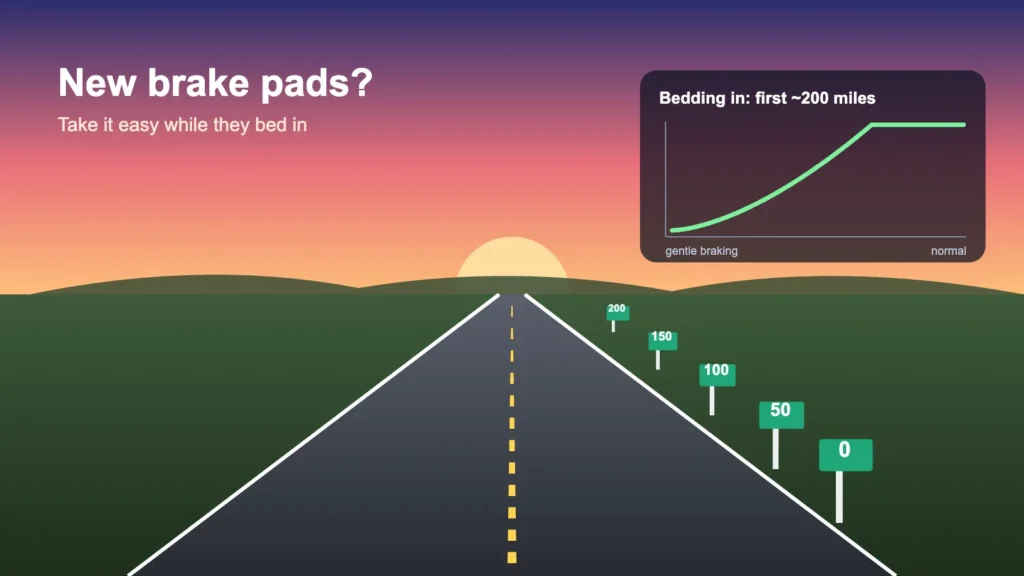
After a brake pads replacement, the new pads need bedding in: for the first couple of hundred miles, brake smoothly and progressively and avoid harsh stops wherever it is safe, unless the pad maker gives different instructions. This lets the pads and discs wear into each other so you get full, even braking. A little extra noise or a slightly different pedal feel at first is common, but some symptoms are not normal and need a check straight away.
This guide explains what bedding in actually is, what you can expect to feel and hear, how to drive in the first few days, and the warning signs that mean you should go back to the mechanic.
What bedding in means
A new brake pad has a fresh, flat surface. The disc it presses against may be new too, or it may have a slightly worn face from the old pads. At first, the two surfaces do not touch perfectly across their whole area.
Bedding in is the short period in which:
- the pad surface wears to match the shape of the disc, so contact is even;
- a thin, even layer of pad material transfers onto the disc, which helps grip;
- any coatings or residues on new pads or discs burn off gently.
Until this happens, the brakes work, but they may not feel as sharp as you expect. Bedding in is part of every brake pads replacement, whether the work is done on your driveway or in a workshop. Our brake pads replacement guide explains the job itself.
What is normal after a brake pads replacement
It helps to know what to expect, so you are not worried by something harmless. In the first few days, these are usually normal:
- A slightly different pedal feel: the brakes may feel a little less sharp until the pads have bedded in.
- A faint noise: a light hiss or occasional soft squeak, especially in the first few stops or in damp weather.
- A mild smell after the first drive: a light smell as new surfaces warm up for the first time. It should fade quickly.
- Light dust on the wheels: new pads can shed a little more dust at first.
If you also had new discs fitted, the same applies: they need the same gentle start.
How to drive for the first couple of hundred miles
Follow any instructions the mechanic or pad maker gives you. Where none are given, these simple habits help:
- Test the brakes before you set off. Press the pedal a few times while stationary. It should feel firm, not soft or sinking.
- Leave more space. Keep a bigger gap to the car in front so you can brake gently and early.
- Brake smoothly and progressively. Build pressure gradually rather than stamping on the pedal.
- Avoid long, heavy braking where you can. On steep hills, use a lower gear to help control your speed.
- Do not hold the pedal hard while stopped after heavy braking. Hot pads held against a hot disc can leave uneven deposits.
- Avoid towing or carrying heavy loads at first, if you can. Extra weight puts more heat into the brakes.
None of this means you should avoid braking in an emergency. If you need to stop hard for safety, always do so. The brakes are fully working; bedding in is about getting the best, most even performance.
Book a fixed-price pad replacement at your home, your work or a trusted local garage, and approve any extra work before it starts.
Normal or not? Symptoms after new pads
Use this table to judge what you notice in the first days after new pads.
| What you notice | Likely meaning | What to do |
|---|---|---|
| Brakes slightly less sharp | Pads still bedding in | Normal. Drive gently and leave extra space |
| Faint squeak in damp weather | Moisture or surface film on the disc | Usually normal. Mention it if it persists |
| Light smell after the first drive | New surfaces warming up | Should fade. Get it checked if it continues |
| Soft or sinking pedal | Possible air or fluid problem | Not normal. Stop driving and get it checked |
| Grinding or metal scraping | Something fitted incorrectly or touching | Not normal. Stop and get it checked |
| Car pulls to one side | Possible sticking caliper or uneven fitting | Not normal. Get it checked promptly |
| One wheel very hot or a strong burning smell | Brake dragging | Not normal. Stop safely and get help |
When to stop driving
A soft pedal, a red brake warning light, grinding, or a strong burning smell are reasons to pull over when safe and get the car checked. Our guides to the brake warning light and signs your brakes need immediate attention explain why.
What to ask after the job is done
A good mechanic will tell you what was fitted and what they found. Before you drive away, it is worth asking:
- Were the discs measured, and are they above the minimum thickness?
- Were the calipers and slide pins checked and cleaned? See brake caliper problems for why this matters.
- What condition is the brake fluid in? It is commonly changed about every 2 years, but follow the manufacturer.
- Does the pad maker give any specific bedding-in instructions?
For more on the questions that help you judge any job, see our list of questions to ask a garage. When you book through Hon Car Service, you get live photo updates during the work, and repairs carry a 12-month parts and labour warranty from the mechanic or garage that does the work. If you are looking for a garage near me in Southampton, Hedge End or Chandlers Ford, or anywhere across the UK, you can book a garage drop-off, free collection and return, or a mobile mechanic.
Frequently asked questions
How long does bedding in take after a brake pads replacement?
Plan on the first couple of hundred miles of gentle, progressive braking, unless the pad maker says otherwise. The brakes work fully from the start; they simply reach their best feel as the surfaces settle.
Is it normal for new brake pads to squeak?
A faint, occasional squeak at first, especially in damp weather, can be normal. Constant squealing, or any grinding or scraping, is not and should be checked.
Can I drive normally straight after new pads are fitted?
Yes, but drive gently. Test the pedal before setting off, leave more space and avoid harsh stops where it is safe to do so. Always brake hard if you need to in an emergency.
Enter your registration and postcode for a fixed price, with parts and labour included.