
Tyre Sidewall Bulge: Is It Safe to Drive and Can It Be Repaired?
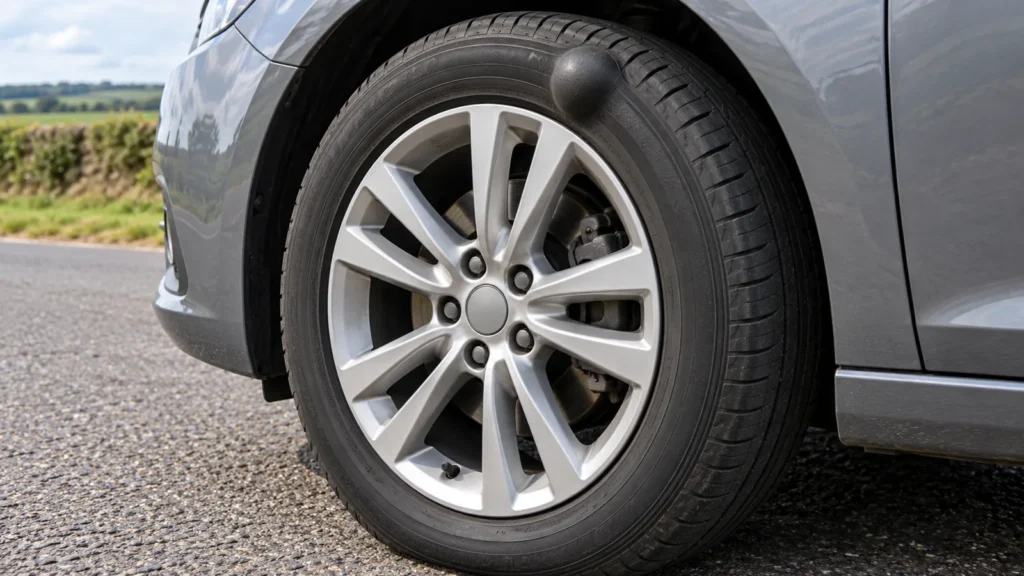
Found a bubble or bulge in your tyre sidewall? Learn why structural damage needs urgent attention, how it differs from an indentation and what to do next.
A bulge or bubble protruding from a tyre sidewall needs urgent professional attention. Do not continue a normal journey on a suspected structurally damaged tyre. Arrange suitable roadside assistance or recovery rather than driving to a garage to find out whether it is safe.
The hero image is an AI-generated illustration. A real tyre must be assessed in person.
What does a tyre sidewall bulge mean?
The sidewall is the tyre’s side surface, between the wheel rim and tread. An outward bubble can indicate damage to the supporting structure beneath the rubber. Michelin warns that this can lead to rapid pressure loss. An impact with a pothole or kerb can cause damage, including on the inner sidewall where it is harder to see.
Is a bulge the same as a normal sidewall indentation?
No. A small inward-looking undulation can be a normal feature of radial-tyre construction. DVSA tells MOT testers to distinguish those manufacturing features from bulges caused by structural deterioration. If you cannot tell the difference, describe what you have found to a tyre professional; an online photograph cannot establish that it is safe.
Can you repair a tyre bulge?
A confirmed structural bulge is not a routine puncture-repair job. Do not try to flatten it, pierce it or treat sealant as a structural repair. A tyre specialist needs to assess replacement. Michelin also distinguishes repairable tread punctures from sidewall cuts or punctures, for which replacement is required.
Will a tyre bulge fail an MOT?
Under DVSA inspection rule 5.2.3(d)(ii), a tyre bulge caused by separation or partial failure of its structure is a dangerous defect. Normal-looking tread depth does not make that structural damage acceptable. Read our MOT tyre rules guide for the wider test checks.
What should I do when I notice one?
- If parked safely: leave the car parked and contact a suitable assistance provider or tyre professional. Explain that the concern is a sidewall bulge rather than a simple slow puncture.
- If a problem develops on the road: prioritise reaching a place of relative safety. Follow the Highway Code breakdown guidance; do not attempt roadside repairs beside moving traffic.
- If stranded on a motorway and unable to get out safely: keep seat belts and hazard lights on and call 999 for the police, as the Highway Code directs.
What information helps when asking for a replacement quote?
- The vehicle registration and location, including whether it is safely parked.
- The tyre size and any required load, speed or run-flat specification; our tyre markings guide explains the numbers.
- Which wheel is affected and whether there was a recent pothole or kerb impact.
- Whether the quote includes fitting, balancing, valve arrangements and disposal.
Ask the provider to explain the proposed tyre specification and any recommendation to replace another tyre. Do not assume every vehicle needs the same replacement approach or that an online price covers all work.
Useful related guides
Book it with HON CAR SERVICE
Explore available services for your vehicle. For an unsafe tyre, arrange suitable assistance first; a booking does not make the car safe to drive.
Sources
Michelin: tyre sidewall damage; DVSA MOT inspection manual, section 5.2.3; Highway Code breakdown rules linked above. Checked 22 October 2026.