
Tyre Size Explained: How to Read Tyre Numbers and Find the Right Fit for Your Car
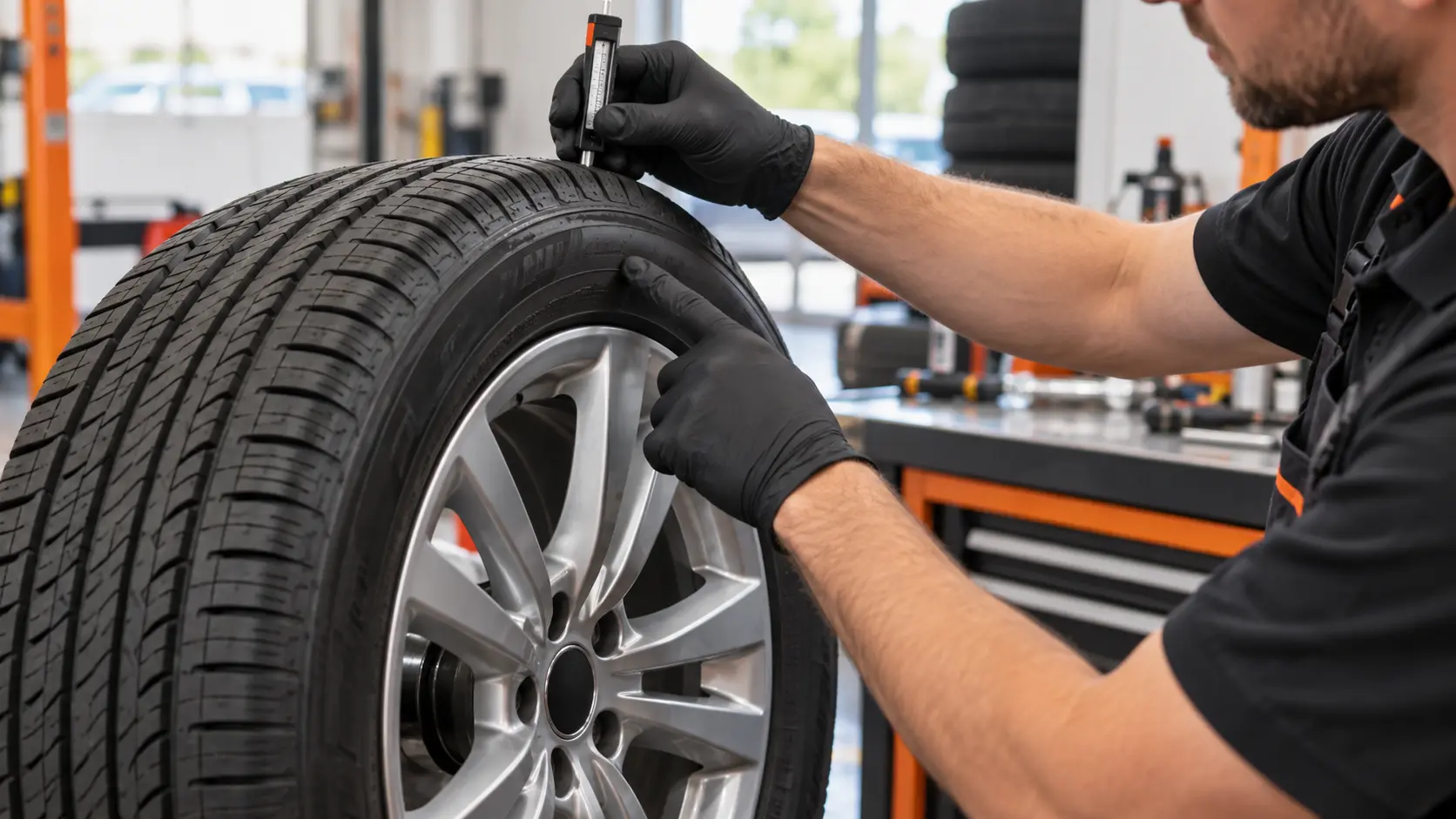
Learn how to read tyre-size numbers, check the correct specification for your car and avoid common tyre-fitting mistakes.
Tyre markings such as 205/55 R16 91V describe the tyre's width, sidewall proportion, construction, wheel diameter, load index and speed rating. These numbers must still be checked against your vehicle's approved fitment before you order replacements.
Tyres affect steering, braking and handling, so a tyre that physically fits the wheel is not automatically the right choice for your car. This guide explains how to read the markings and avoid common fitting mistakes in the UK.
What tyre size do I need for my car?
The correct tyre specification depends on the vehicle's make, model, year, wheel, axle and approved options. Read the handbook, tyre information label or manufacturer-approved fitment before ordering. The tyres already fitted may not be the original or approved specification.
How to read 205/55 R16 91V
| Marking | Meaning |
|---|---|
| 205 | Nominal tyre width in millimetres. |
| 55 | Aspect ratio: sidewall height is 55% of the width. |
| R | Radial construction. |
| 16 | Compatible 16-inch rim diameter. |
| 91 | Load index; 91 corresponds to 615 kg per tyre under its specified conditions. |
| V | Speed rating; V is rated to 240 km/h under the relevant conditions. |
Tyre width
The first number is the nominal section width. A wider tyre is not automatically better: width affects clearance, steering feel, rolling resistance and compatibility with the wheel.
Aspect ratio
The number after the slash is the sidewall height as a percentage of width. For 205/55, the nominal sidewall height is 205 × 0.55, or approximately 113 mm.
Wheel diameter
R16 means the tyre is designed for a compatible 16-inch rim. It cannot be fitted to a 17-inch rim simply because the outside diameter looks similar.
Load index and speed rating
The load index is not the vehicle's total payload. The speed rating is not a permitted road speed. Both must meet the vehicle manufacturer's requirements.
Common speed ratings
| Rating | Rated maximum speed |
|---|---|
| T | 190 km/h |
| H | 210 km/h |
| V | 240 km/h |
| W | 270 km/h |
| Y | 300 km/h |
Where can you find the correct tyre specification?
- Check the vehicle handbook.
- Look for the tyre-pressure and specification label in a door opening, door pillar or near the fuel filler.
- Read every marking on the existing tyre, including load index, speed rating and special construction markings.
- Ask a qualified tyre fitter to confirm the approved fitment if the wheels may have been changed.
Can front and rear tyres be different sizes?
Yes. Some vehicles have a staggered setup with different approved dimensions on the front and rear axles. Do not assume all four tyres are identical, and do not fit different sizes across one axle unless the manufacturer permits it.
What do XL, run-flat and other markings mean?
| Marking | Meaning |
|---|---|
| XL or Reinforced | Higher-load construction under specified conditions. |
| M+S | Mud and Snow marking; it is not the same as the 3PMSF snow-performance symbol. |
| 3PMSF | Three-Peak Mountain Snowflake symbol for a defined snow-performance requirement. |
| Run-flat | A tyre designed for limited continued mobility after certain pressure-loss events. |
Run-flat and vehicle-specific markings vary between manufacturers. Check the handbook before changing to a different construction.
What happens if you fit the wrong tyre size?
- Rolling circumference can affect speedometer accuracy and wheel-speed systems.
- Width, sidewall and construction can change handling and braking.
- An unsuitable tyre can rub suspension parts, bodywork or wheel-arch liners.
- Incorrect circumference can affect ABS, stability control, traction control or all-wheel-drive systems.
- Unsuitable fitment may create MOT, insurance or safety problems.
Can you change your tyre size?
Only when the complete wheel and tyre combination is approved and suitable. Check width, aspect ratio, rim diameter, wheel width and offset, load index, speed rating, rolling circumference, clearance, pressure and compatibility with vehicle systems.
Do all four tyres need to match?
Follow the approved vehicle fitment. Tyres on the same axle must meet applicable requirements, and closely matched tyres usually give more predictable handling. All-wheel-drive vehicles can have specific requirements for matching circumference and tread wear, so check the handbook before replacing one tyre.
Tyre replacement checklist
- Confirm the approved size and wheel specification.
- Read the size, load index and speed rating on each tyre.
- Check whether the front and rear axles use different sizes.
- Confirm XL, run-flat or vehicle-specific requirements.
- Inspect for cuts, bulges, exposed cords and uneven wear.
- Ask a qualified tyre fitter if anything is unclear.
Do not drive on a tyre with a bulge or exposed cords. Arrange professional assistance.
How does tyre size affect pressure?
Correct pressure cannot be worked out from tyre size alone. Two vehicles using the same nominal size may need different pressures because of weight, axle loading and manufacturer requirements. Use the vehicle's pressure label or handbook and check pressures when the tyres are cold.
Frequently asked questions
What does 205/55 R16 mean?
It describes a nominal width of 205 mm, a 55% aspect ratio, radial construction and a 16-inch rim diameter. You must also check load index, speed rating and any additional requirements.
Can I fit 205/60 R16 instead of 205/55 R16?
Not without checking the approved specification. The different sidewall height and rolling circumference can affect clearance and vehicle systems.
Is a higher load index always better?
Not automatically. It must match the complete manufacturer-approved specification.
Do I need run-flat tyres if the car originally had them?
Check the vehicle requirements before changing construction. Tyre-pressure monitoring, mobility and handling considerations may apply.
Can I find tyre size using the registration number?
Registration searches can suggest sizes, but vehicles may have multiple approved options or aftermarket wheels. Confirm against the actual car and manufacturer information.
Are wider tyres always safer?
No. Safety depends on the complete tyre design, road conditions and vehicle compatibility.
Get help choosing the correct tyres
Whether you have uneven wear, a puncture or uncertainty about the correct replacement specification, use the HON CAR SERVICE services page or booking form to request help.