
MOT Tyre Rules: A Driver’s Pre-Test Safety Guide
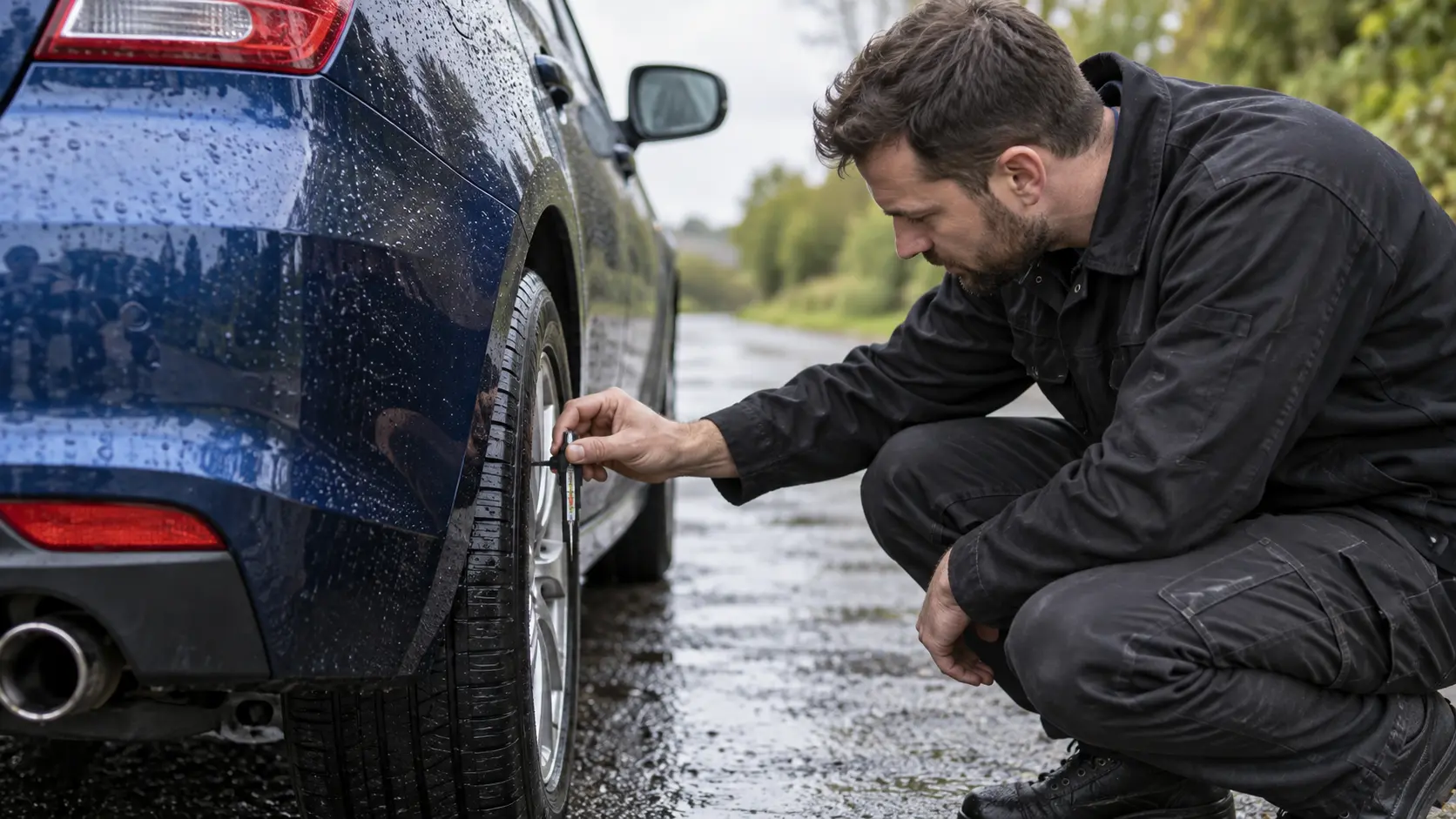
Prepare your tyres for an MOT with a practical guide to tread depth, visible damage, tyre pressure and warning signs that need attention.
MOT Tyre Rules: What to Check Before Your Test
Your tyres are the only parts of the car that normally make contact with the road. Their condition affects steering, braking and grip, particularly in wet weather.
An MOT includes tyre checks, but it is worth inspecting your tyres regularly rather than waiting for your annual test.
Start with tread depth
For most passenger cars, the legal minimum tread depth is 1.6 mm across the central three-quarters of the tyre’s breadth and around its entire circumference.
Use a suitable tread-depth gauge to measure several points across each tyre. If the tread is approaching the limit, consider arranging replacement before it becomes illegal or compromises wet-weather performance.
Pay attention to uneven wear. A tyre that is worn heavily on one shoulder may indicate a pressure, alignment or suspension issue that needs investigating.
Inspect the tyre walls and tread
Look for bulges, deep cuts, exposed cords and objects embedded in the rubber. A bulge may indicate internal structural damage and should be assessed urgently.
Do not assume that a tyre is safe simply because it still holds air. If you discover significant damage, seek professional advice before driving.
Check pressure using your vehicle’s specification
Use the pressures recommended for your car and load, usually shown in the handbook or on a vehicle information label.
Check pressures when the tyres are cold, where practical. Incorrect pressure can affect handling and contribute to uneven wear.
If the tyre-pressure warning light stays on after pressures have been checked and the system has been reset according to the handbook, have the cause investigated.
Make sure the tyres are suitable for your vehicle
Tyres need to be appropriate for the vehicle and fitted in a permitted combination. Check the required size, load capacity and other specifications before buying replacements.
If your vehicle has different front and rear tyre sizes, use the manufacturer’s approved fitment information rather than assuming all four tyres should match.
What about a spare tyre?
A spare tyre is not normally part of the MOT tyre inspection, but you should still check its condition and pressure if your vehicle carries one. Also check that the jack and wheel-changing equipment are present where supplied.
A tyre can need attention even after an MOT pass
An MOT is a snapshot of condition on the test day. Tyre damage can occur immediately afterwards, and tread can wear significantly before the next annual inspection.
Check your tyres before long journeys and whenever you notice vibration, pulling or a persistent loss of pressure.
Need help with a tyre-related issue before your MOT?
Visit HON CAR SERVICE to arrange an MOT or discuss a tyre-related repair.