
Car Heater Blowing Cold Air? Common Causes Explained
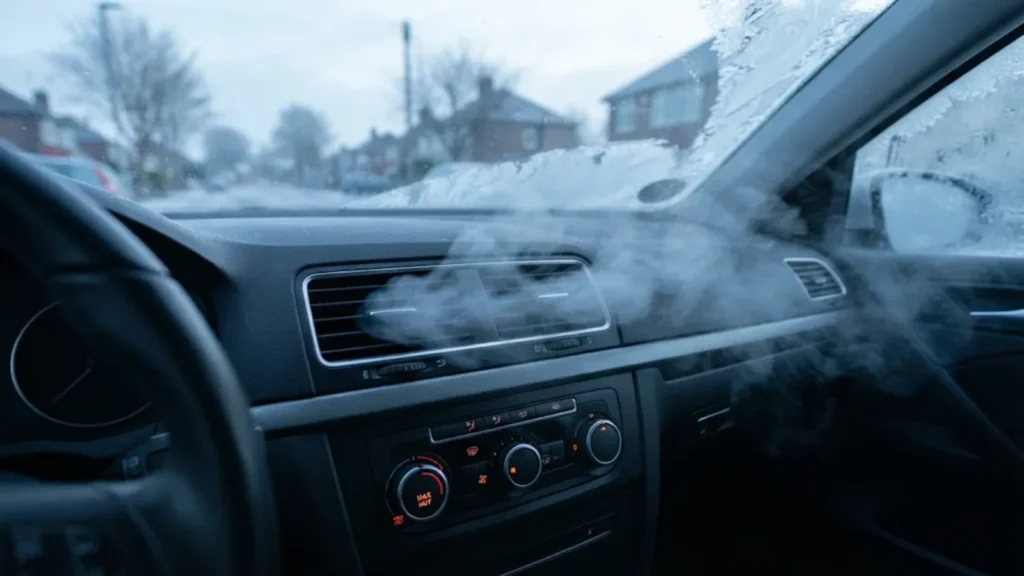
Car heater blowing cold air on a winter morning? Learn the usual causes, from low coolant to a sticking thermostat, what you can safely check and when to book.
If your car heater is blowing cold air, the cause is usually one of a handful of things: low coolant, a thermostat that is stuck open, air trapped in the cooling system, a blocked heater matrix or a fault with the controls that direct warm air into the cabin. Some of these are minor. Others, particularly anything involving coolant loss, can lead to engine damage if they are ignored. This guide explains how to tell them apart and what you can safely check yourself.
How your car heater actually works
Most petrol and diesel cars do not have a separate heater. They borrow heat from the engine. Hot coolant is pumped through a small radiator behind the dashboard, called the heater matrix, and the blower fan pushes air across it into the cabin. A flap, often moved by a small electric motor, blends hot and cold air to give you the temperature you have selected.
That means a cold heater is often a clue about the engine’s cooling system rather than a fault with the heater alone. Electric and many hybrid vehicles work differently, using an electric heater or heat pump, so the causes below apply mainly to combustion engines.
The most common causes
1. Low coolant
This is the first thing to rule out. If the coolant level drops, the heater matrix is often the first part of the system to run short, because it sits high up. You may notice the heater works at higher revs but goes cold at idle. Low coolant always has a reason, usually a leak, so topping up is only a short-term fix. Our guide to identifying fluid leaks by colour can help you work out where it is going.
2. A thermostat stuck open
The thermostat keeps coolant away from the main radiator until the engine is warm. If it sticks open, the engine takes a long time to reach temperature, or never quite gets there in cold weather. Typical signs are a temperature gauge that sits lower than usual and a heater that is only lukewarm, especially on the motorway.
3. An airlock in the cooling system
Air can become trapped after a coolant change or repair. Because the heater matrix is high in the system, an air pocket can stop hot coolant reaching it. Some cars need a specific bleeding procedure, so this is best handled by someone familiar with the model.
4. A blocked heater matrix
Over time, sludge or debris can build up inside the matrix, particularly if the coolant has not been changed at the intervals in the service schedule. The heater may produce some warmth but never gets properly hot, even when the engine is at full temperature.
5. Blend flap or control faults
If the engine is warm, the coolant level is correct and the heater still blows cold, the problem may be the flap that mixes hot and cold air, or the motor that moves it. A clicking noise behind the dashboard when you change the temperature is a common sign.
6. Blower fan problems
If no air comes out at all, or the fan only works on its highest setting, the issue is usually electrical, often the blower motor or its resistor. In that case the air may be warm but there is too little of it to heat the car.
Not sure why your heater has gone cold?
Enter your car registration and postcode to get an instant quote. Every job comes with a 12-month parts and labour warranty from the mechanic who does the work.
What you can safely check yourself
- Coolant level. With the engine completely cold, check the level in the expansion tank against the minimum and maximum marks. Never open the cap on a hot engine, because the system is under pressure. If it needs topping up, use the coolant type listed in your handbook.
- Temperature gauge. After 10 to 15 minutes of driving, the gauge should sit in its normal position. If it stays low, a thermostat fault is likely. If it climbs higher than usual, stop somewhere safe and seek help.
- Heater settings. Check the temperature control is set to hot, that recirculation is set as you expect and that the vents are open. It sounds obvious, but it is worth ruling out.
- Signs of leaks. Look for damp patches under the car, a sweet smell in the cabin, or misting that is hard to clear. A sweet smell and a greasy film on the inside of the windscreen can point to a leaking heater matrix.
When to stop driving
A cold heater on its own is uncomfortable rather than dangerous. Stop and get the car checked if the temperature gauge rises above normal, a coolant warning light comes on, you see steam from under the bonnet or the coolant level keeps dropping. Running an engine low on coolant can cause overheating and serious damage. Our article on radiator cap symptoms and pressure testing covers how leaks are traced.
A heater that will not clear the windows also affects safety. The Highway Code (rule 229) says you must be able to see before you set off, and that windows should be demisted thoroughly. If your heater cannot do this, the car is not ready for winter driving.
How a mechanic diagnoses the fault
A mechanic will usually confirm the engine reaches its normal operating temperature, check the coolant level and condition, pressure-test the system for leaks, feel the heater hoses to see whether hot coolant is reaching the matrix and check the operation of the blend flaps and fan. On many modern cars, a diagnostic inspection can also read fault codes from the climate control system.
If the fault turns out to be part of wider cooling system wear, it is often worth combining the repair with a car service so the coolant is renewed at the same time. For more cold-weather preparation, see our winter car service checklist.
Frequently asked questions
Why does my car heater only work when I am driving?
Heat that comes and goes with engine speed usually means the coolant is low or there is air in the system. At higher revs the water pump pushes enough coolant through the heater matrix, but at idle it cannot.
Can a bad thermostat cause the heater to blow cold?
Yes. A thermostat that is stuck open stops the engine reaching its proper temperature, so the coolant passing through the heater never gets hot enough to warm the cabin properly.
Is it safe to drive with the heater blowing cold?
It can be, as long as the temperature gauge is normal, the coolant level is correct and you can keep every window clear. If the engine is overheating or losing coolant, stop and get it checked.
Will a cold heater cause an MOT failure?
The heater itself is not part of the MOT. However, a coolant leak that is significant enough to be recorded, or anything that affects the driver’s view, could be noted at an approved MOT test centre.
Image: AI-generated illustration.