
Whining Steering? Power Steering Fluid Leak: Causes and Fixes
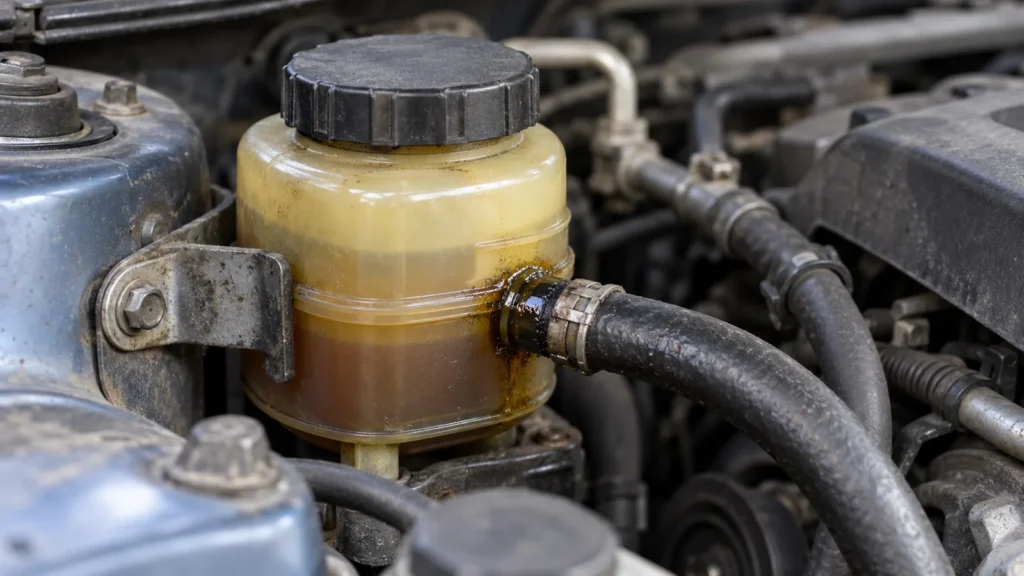
Power steering leaking or whining? Learn the possible causes, safe checks and what affects power steering leak repair cost before approving repairs.
A whining noise when you turn, heavier steering and a falling fluid level can point to a hydraulic power steering leak. The cause may be a hose, connection, reservoir, pump or steering rack. The symptoms do not prove which part has failed, and replacing the pump before tracing the fault can waste money.
First check which steering system your car uses. Fully electric power steering has no hydraulic fluid reservoir to top up. Electro-hydraulic steering still uses fluid, even though an electric motor drives its pump.
If steering suddenly becomes heavy, assistance comes and goes, or you cannot control the car normally, stop as soon as it is safe and arrange assistance. Do not drive on to test it.
Whining steering needs a diagnosis
Describe the noise, steering feel and any fluid loss when arranging an inspection.
Why does the steering whine when turning?
Hydraulic assistance depends on fluid moving through the system. A low level or air in the fluid can make the pump noisy. However, a full reservoir does not rule out a fault: poor bleeding after work, fluid condition, electrical supply on an electro-hydraulic system and vibration from pipes or mountings also need consideration.
ZF's technical guidance recommends checking these factors before condemning an electro-hydraulic pump. Note whether the noise appears only when cold, changes as you steer or started after a repair. This is more useful to a technician than simply describing the sound as a bad pump.
A squeal can have a different source from a hydraulic whine. Do not deliberately hold the steering against full lock to reproduce a noise, and do not assume every sound near the steering wheel comes from the hydraulic system.
Where does power steering fluid leak from?
- Hoses, pipes and connections: inspect for damage, corrosion and wet joints along the hydraulic circuit.
- Reservoir and its connections: fluid around the container needs tracing rather than an immediate assumption that the tank itself has split.
- Pump: leakage around the assembly needs distinguishing from fluid that has run down from elsewhere.
- Steering rack and seals: the rack is another possible source; an oily patch beneath the front cannot identify it on its own.
Fluid can travel before it drips. Tell the workshop where you noticed the patch and whether the reservoir level is falling, but avoid diagnosing a component from the parking-space stain alone. Colour is not a reliable way to choose replacement fluid.
What can you safely check yourself?
- Read your handbook to identify the steering system and the correct reservoir, if fitted. Never add fluid to an unidentified container.
- Park safely on level ground. Follow the vehicle's specified hot or cold checking conditions, engine state and level marks.
- Look for accessible wetness without putting hands near belts, pulleys or fans. Do not crawl beneath a car supported only by a jack.
- Record warning messages, when the noise occurs and whether the level changes. Photographs taken safely can help explain the complaint.
Use only the exact fluid specification required for your vehicle. “Power steering fluid” is not a universal specification, and some applications have particular hydraulic-fluid requirements. Do not mix products or add a stop-leak treatment as a substitute for locating the leak. Repeated topping up does not repair the cause.
For routine checks of other reservoirs, see our car fluid levels guide. This article concerns steering noise and leakage rather than general servicing.
How is a power steering leak fixed?
A useful inspection identifies the system, confirms the fluid level and specification, traces the leak and assesses assistance. Depending on the design, checks can include the pump supply, lines, mountings and diagnostic information. Chrysler's pump-noise guidance also highlights checking the reservoir and related components before replacing a pump.
The repair should match the confirmed defect: a damaged hose, leaking connection or defective pump requires a different remedy from a rack problem. A workshop should explain what was found and what the quote includes before work proceeds.
After opening a hydraulic circuit, the correct refill and bleeding procedure matters. There is no single lock-to-lock routine suitable for every car. ZF's pump replacement advice calls for the specified fluid, appropriate bleeding and a final leakage check; some replacement electro-hydraulic pumps also require vehicle-specific electronic setup.
Power steering leak repair cost: what changes the quote?
There is no single power steering leak repair cost that fits every car. A leaking hose or connection is a different job from replacing a pump or steering rack. Identify the leak before comparing prices: the cheapest quote is not useful if it covers the wrong component.
- Vehicle and steering system: the exact model, engine and hydraulic or electro-hydraulic arrangement determine the parts and procedure. Fully electric steering does not have a hydraulic leak to repair.
- Parts and access: ask which hose, seal, pump or rack is included and whether other components need removing to reach it.
- Fluid and finishing work: confirm the correct fluid, refill, bleeding and final leak check. Ask whether any vehicle-specific electronic setup or alignment checks are required for the proposed work.
- Quote boundaries: compare labour, parts, applicable VAT and any separate diagnostic charge on the same basis. Do not assume a diagnosis fee includes the eventual repair.
Request an itemised quotation for the confirmed fault. HON does not publish a verified price range for this repair in this guide; availability and the appropriate next step depend on your vehicle and location. Start with a diagnostic inspection when the cause is uncertain.
Common questions
Can I drive with a small power steering leak?
A small visible patch does not establish that the car is safe. If the level is low, the leak is active or assistance has changed, seek advice before driving. Sudden heavy or unreliable steering requires a safe stop and assistance.
Does a whining pump always need replacing?
No. Air, fluid-related problems, electrical supply or transmitted vibration can produce noise. The source needs confirming first.
How much will the repair cost?
That depends on the vehicle, the failed component and access. Ask for a diagnosis and an itemised quote rather than comparing a hose repair with an entire rack replacement.
Get the cause checked before replacing parts
Use the diagnostic inspection page to review the service and booking options.
Book it with HON CAR SERVICE
Explore diagnostic inspection and car servicing options. Online booking is available 24/7; telephone enquiries are Monday–Friday, 08:00–18:00 UK time.
Start your bookingRelated articles
- Car bouncing over bumps: rear shock absorbers
- Wheel balancing versus wheel alignment
- Mobile mechanic or garage?
Technical sources
- ZF Aftermarket: electro-hydraulic steering noise diagnosis (Portuguese technical guidance).
- ZF Aftermarket: replacing electro-hydraulic steering pumps (2018).
- Chrysler: checks before replacing a noisy power steering pump.
- Ford owner's manual: electric steering has no fluid reservoir.
These sources explain system principles; always follow the handbook and repair information for your own vehicle. Hero image: AI-generated illustration, not a customer vehicle photograph.