
Wayve, Stellantis and NVIDIA Plan Autonomous Driving Deployment in France
London-based Wayve joins a French autonomous-driving collaboration. Here is what was announced, what remains unconfirmed and why UK drivers must distinguish assistance from self-driving.
London-based Wayve has announced a collaboration with Stellantis, NVIDIA and the French government to advance autonomous vehicles in France and support development across the EU. Announced in Paris on 23 October 2026, the initiative brings together driving software, computing and vehicle engineering.
For UK readers, the useful question is what this announcement actually establishes. It is a French deployment collaboration involving a British technology company, not a notice that an existing car can now drive itself on British roads.
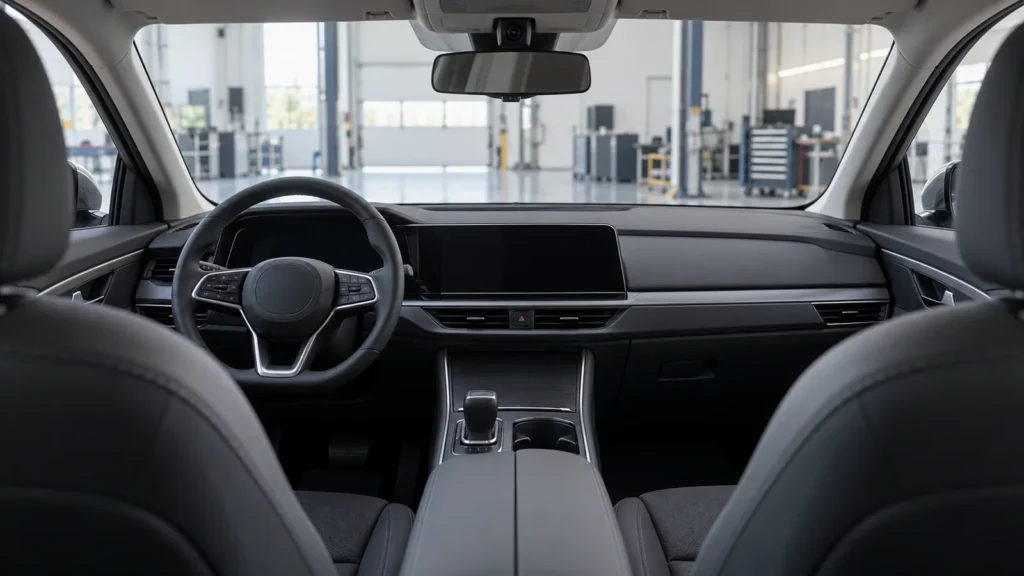
Image: original AI-generated illustration of a generic stationary car cabin, not a photograph of the partners' technology or a road trial.
What are Wayve, Stellantis and NVIDIA contributing?
According to Wayve's announcement, Stellantis contributes its L4-Ready vehicle platforms and manufacturing expertise. Wayve supplies its AI Driver, which is to integrate NVIDIA Halos OS using NVIDIA Hyperion computing and sensors.
The partners also describe work with local French transport stakeholders, including city authorities and unions. The release sets out a collaboration and its intended direction; it does not specify a UK customer launch date or a retail price.
Keep today's vehicle maintained
Technology announcements do not replace your car's servicing schedule.
Does assisted driving mean self-driving?
No. The Highway Code's introduction distinguishes self-driving functions from assistance such as cruise control and lane-keeping. When using assisted driving, the driver remains responsible for driving at all times.
The Code also explains that a self-driving function may be limited by conditions such as location, road type, speed or weather. Its use depends on the approved function and the manufacturer's instructions, not a general claim that a vehicle contains AI.
What should a UK driver check before relying on a feature?
- The exact function: read the instructions for your model and software version, including supervision requirements.
- Its operating conditions: understand where it works and when it may become unavailable.
- The approval status: use official Great Britain self-driving guidance; a foreign development announcement does not establish UK authorisation.
A partnership headline is a starting point for following the technology, not a substitute for those checks. Do not treat the wording on a feature button or an online demonstration as permission to stop supervising an assisted-driving system.
Why maintenance still matters
Whatever technology a vehicle has, keep its routine care separate from news about future capabilities. Follow its maintenance instructions and have concerns assessed rather than assuming an electronic feature will compensate for a fault.
Plan the work your car needs
Check the available services for your vehicle and postcode.
Book it with HON CAR SERVICE
Browse vehicle services and how booking works. This article does not advertise autonomous-driving installation or system calibration as a HON service.
Related reading
- AION UK expands diagnostic support for body and glass repairs
- Cross-pavement EV charging: what changed in England
- What the rise in privately kept electric cars means
Sources and dates
Wayve's original announcement, 23 October 2026; the official Highway Code and Great Britain guidance are linked above. Published 26 October 2026. No UK launch timing or product availability is inferred from the French announcement.