
All Warning Lights On After a Storm? What to Check First
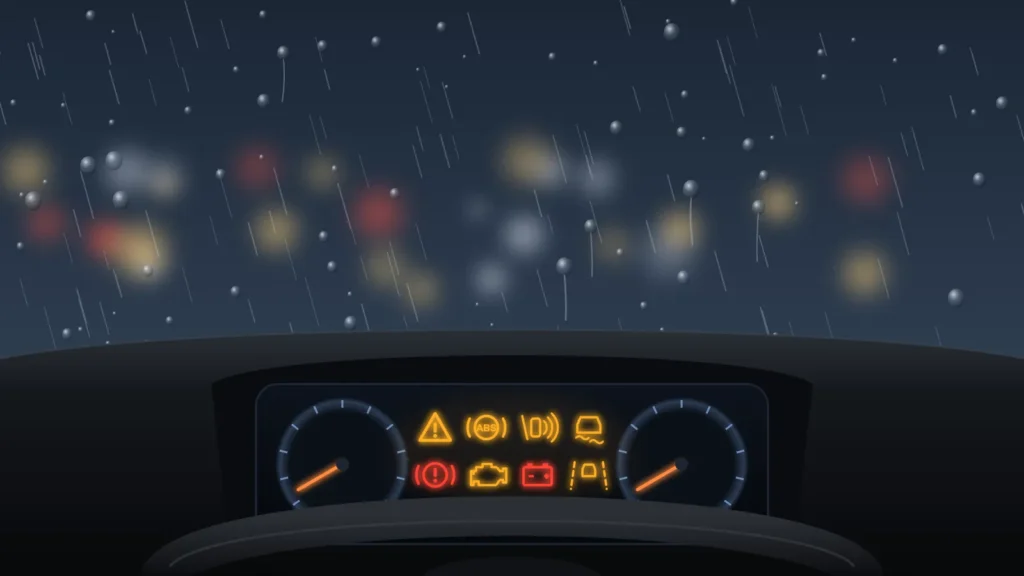
Warning lights on after Storm Austen or heavy rain? Often it's a dirty radar or camera sensor, not a big fault. What to check first, how to clean sensors safely and when you need a diagnostic check.
Storm Austen brought gusts of over 70mph to exposed coasts and 20 to 30mm of rain to southern England and south Wales on 22 and 23 October, and Storm Boelo followed with strong winds for Scotland, Northern Ireland and northern England over the weekend of 24 and 25 October. After weather like that, plenty of drivers get into the car and find the dashboard lit up with warning lights. It looks alarming, but very often the cause is simple: a sensor covered in dirt, salt or water rather than a serious fault. This guide explains why it happens, what to check first, how to clean sensors safely and when you need a proper diagnostic check.
Quick answer: why do warning lights come on after a storm?
- Blocked radar or camera sensors. Driver assistance systems rely on a radar at the front of the car and a camera at the top of the windscreen. Mud, road spray, salt, leaves or heavy rain can block them, and several systems then switch off at once, each with its own warning.
- Dirty parking and blind-spot sensors in the bumpers and around the mirrors.
- Mud or water around wheel speed sensors, which can bring on the ABS or traction control lights.
- Water getting into a connector, often through blocked drains under the windscreen or around a sunroof.
- A weak battery. Cold, damp weather and short trips with the lights, wipers and heater on all add to the load, and low voltage can trigger several warnings at once.
- A genuine fault that the storm simply happened to show up, for example in the brakes or the engine.
A real example: a Mercedes E-Class with every warning light on
After a recent storm, one of our customers called us because his Mercedes E-Class had lit up with warning lights across the dashboard. The car drove normally, but the display was full of messages and he expected a big repair bill. Before booking any diagnostics, we suggested a simple first step: take the car through a car wash. He did, and when he restarted the car every light had gone out.
The most likely explanation is a dirty sensor. On many modern cars the front radar sits behind the badge or in the lower grille, and the camera sits at the top of the windscreen. When storm winds and road spray coat them in grime, salt or sand, the car can't trust what they see, so it switches off the systems that depend on them, such as automatic emergency braking, adaptive cruise control, lane assist and pre-collision systems. Each one shows its own warning, so a single dirty sensor can look like the whole car has failed.
It's also why the wash fixed it. An electrical earth fault, for example, would not be cured by a car wash. If the lights had come back with the car clean, the next step would have been a diagnostic check.
Why storms are hard on car sensors
- Salt spray. Near the coast, strong winds carry salt spray inland, and it dries into a film on the front of the car and the windscreen.
- Road spray. Heavy rain washes mud and grit onto the road, and every lorry you pass throws it back at your car.
- Debris. Leaves, twigs and dust collect in grilles, bumpers and the drains under the windscreen.
- Standing water. Deep puddles can soak wiring and sensors underneath the car.
- Heavy rain and snow can temporarily limit what a radar or camera can see, even when the car is clean.
What to do when warning lights come on after a storm
1. Check the colour first
Red warning lights mean stop safely as soon as you can. Amber lights mean get the car checked soon. Green and blue lights are for information. Our guide to dashboard warning light colours explains the most common symbols.
2. Read the message on the display
Many cars tell you exactly what's wrong. Messages such as "sensor blocked", "radar sensors dirty", "camera view restricted" or "driver assistance unavailable" point straight to a dirty or obstructed sensor. Your owner's handbook shows where each sensor is fitted.
3. Clean the sensors gently
- The front badge and grille area, where the radar is often fitted.
- The outside of the windscreen in front of the rear-view mirror, where the camera looks out.
- The round parking sensors in the front and rear bumpers.
- The rear bumper corners and door mirrors, where blind-spot sensors are often fitted.
Use plenty of water and a soft cloth or sponge. A normal car wash usually does the job. If you use a pressure washer, keep the lance well back from sensors, badges and camera areas rather than blasting them from close range.
4. Restart the car and drive a short distance
Switch off, wait a minute, then restart. Many systems run a self-check and switch themselves back on once they can see clearly again, sometimes after a few minutes of driving.
5. If you drove through deep water, test your brakes
The Highway Code (rule 121) warns that brakes may be less effective after driving through deep water. Test them at the first safe opportunity by gently pressing the pedal, and if they don't feel right, apply light pressure while driving slowly to help dry them out.
6. If the lights stay on or keep coming back, get a diagnostic check
If cleaning doesn't clear the warnings, or they return on a dry day with a clean car, the cause is something else. A professional diagnostic inspection reads the fault codes from every control unit and finds out why they appeared, rather than just switching the lights off.
Enter your registration and postcode for a fixed-price diagnostic check, then choose a mobile mechanic at home or work, free collection and return, or a trusted local garage.
Warning lights you should never put down to the weather
Dirty sensors usually affect driver assistance and parking systems. These warnings need attention whatever the weather:
- Red brake warning light: it can mean low brake fluid or a brake system fault. Stop safely and get it checked. See our brake warning light guide.
- Oil pressure or engine temperature warning: stop as soon as it's safe and switch off the engine.
- Battery or charging light: the battery may not be charging, and the car could stop. If your battery has been struggling, our guide on why a car battery keeps going flat can help.
- Flashing engine management light: this often means a misfire. Reduce your speed and get the car checked straight away.
- Airbag warning light: the airbags may not work in a crash.
When it isn't dirt: other causes after a storm
Water in electrical connectors
Blocked drains under the windscreen or around a sunroof can let rainwater reach wiring and control units. Warnings that come and go, especially after heavy rain or when the car is parked nose-down, can point to a leak. Look for damp carpets, misted windows or a musty smell.
A weak battery
A tired battery can cope in mild weather and then struggle when it's cold and wet. Low voltage confuses the car's electronics and can bring on a cluster of unrelated warnings. A quick battery and charging test will show whether the battery needs replacing.
Wheel speed sensors and ABS
Mud, stones or water around a wheel speed sensor, or damage to its wiring, can turn on the ABS and traction control lights together. If they stay on after a wash, the sensor or its wiring needs checking.
Water in the engine
Driving through deep floodwater can let water into the engine's air intake, which can cause serious damage. If the engine cuts out in water, don't try to restart it. Get the car recovered and checked instead.
Will warning lights affect your MOT?
Some will. Under the MOT inspection manual, an engine management light that shows a malfunction is a major defect on petrol cars first used from 1 July 2003 and diesel cars first used from 1 July 2008. An airbag (SRS) warning light or an electronic stability control (ESC) warning light that shows a system malfunction is also a major defect. So if a warning light won't go out, get it diagnosed before your test. Our guide to the engine management light before an MOT explains more, and you can book your MOT online with a service at the same time.
How Hon Car Service can help
Hon Car Service is an online booking platform for car servicing, MOTs and repairs across the UK. If a warning light won't go away, enter your car registration and postcode for an instant fixed price on a diagnostic check, with parts and labour included in any repair quote. Choose a mobile mechanic at your home or work, free collection and return, or a trusted garage near you. If anything else is found, you get a separate quote first, nothing extra is done without your approval, and every job comes with a 12-month parts and labour warranty.
Fixed price, your approval before any extra work, and a 12-month parts and labour warranty.
FAQs
Can heavy rain make warning lights come on?
Yes. Heavy rain, snow and road spray can stop radar and camera sensors seeing clearly, so driver assistance systems switch off and show warnings. Water getting into a connector can also cause electrical warnings. If the lights go out once the car is clean and dry, the weather was most likely the cause.
Why did my warning lights go off after a car wash?
Most likely a sensor was covered in dirt, salt or debris. Once it was clean, the car could trust the sensor again and switched the affected systems back on. If the warnings return with a clean car, get a diagnostic check.
Is it safe to drive with a "sensor blocked" or "driver assistance unavailable" warning?
The car will normally still drive, but systems such as automatic emergency braking or adaptive cruise control may not work. Drive with extra care, clean the sensors as soon as you safely can, and get the car checked if the warning doesn't clear.
Can I use a pressure washer on parking sensors?
Yes, but keep the lance well back. A strong jet held close to a sensor, badge or camera area can damage it or force water past its seals. A sponge and plenty of water are the gentlest option.
Should I worry if lots of warning lights come on at once?
Not always. Several warnings at the same time often share one cause, such as a dirty radar sensor or a weak battery. Check the colours and the messages first. A red warning means stop safely, and any warning that stays on after cleaning and a restart needs a diagnostic check.