
Car MOT Test: What Happens on the Day and After the Result
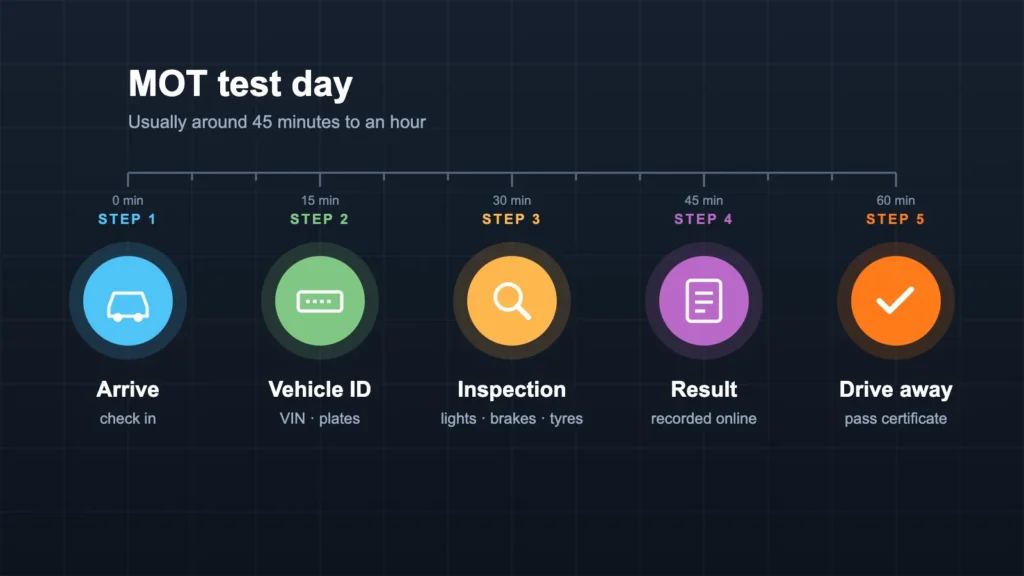
Understand a car MOT test from arrival to the recorded result, including inspection limits, defect categories and safe next steps after a failure.
A car MOT test checks specified safety and environmental standards at the time of inspection. The tester records the result and any defects; the owner then needs to understand what passed, what needs attention and whether the car can be driven. It is not the same job as a service.
This guide follows test day from handover to result. If you need the appointment first, start with finding an MOT test near you. For the existing certificate, use our MOT check guide.
Plan the inspection, not just the arrival time
Confirm the appointment and transport arrangements for your vehicle.
Before setting off
Make sure the journey is safe and lawful. Tell the centre in advance about serious symptoms or an expired certificate. A booking does not make a dangerous vehicle safe to drive; suitable recovery may be needed.
Clear items that obstruct access to inspection areas, have the keys available and supply a number the centre can reach. Check what to bring to your MOT and our pre-MOT preparation guide. Simple preparation helps the appointment proceed; it cannot guarantee a pass.
Arrival and vehicle identity
Confirm the vehicle and booked work at reception. Check whether you are leaving the car or waiting and agree how the result will be communicated. If a service is also booked, ask how the two jobs fit together rather than assuming all maintenance forms part of the test.
Vehicle identification and recorded mileage form part of the process. If details do not match, clarify them before the appointment progresses. Have relevant information available for a registration change or unusual vehicle.
What happens during the car MOT test?
The tester follows the applicable inspection manual. The sequence can vary, and requirements depend on age, type and equipment. The broad areas include:
- Lighting, signals and relevant electrical equipment.
- Braking performance and brake components within the inspection.
- Steering, suspension, wheels and tyres.
- Seat belts, seats and relevant restraint-system checks.
- Visibility, mirrors, windscreen, wipers and washers.
- Body structure, fuel and exhaust systems, and applicable emissions checks.
Fully electric cars have no exhaust emissions test; hybrid procedures depend on the vehicle and manual. Our detailed inspection guide explains the scope. The MOT does not assess the condition of the engine, clutch or gearbox, so an unrelated complaint may need separate diagnosis.
Waiting, viewing and updates
Ask the centre for the inspection estimate and total time it expects to keep the car. Arrival, inspection, any authorised repairs and a retest are separate stages; collection also adds transport time.
You may watch from a designated viewing area without interrupting the tester. Keep questions until an appropriate point after the inspection. If you leave, remain contactable so repair decisions do not depend on unanswered calls. Collection and return may be an alternative where offered.
Read the result before deciding what to do
The result is entered in the MOT database. You can ask for a printed certificate after a pass and check the recorded history online. Read the expiry date and all observations, not just the word “pass”.
- Dangerous or major defects: the vehicle fails.
- Minor defects: the vehicle can pass, but the issue needs attention.
- Advisories: monitor and address the items before they worsen.
Use our MOT results guide if the wording is unclear. Ask what each finding means for safety, what repair is proposed and what can be planned separately.
If repairs or a retest are needed
Approve a clear quote before chargeable repairs begin. Confirm the scope and any revised completion time. A failed car may qualify for a partial retest, with the fee depending on the circumstances and timing; see the retest rules.
Do not drive with a dangerous defect. Taking a car away after a failed early test requires an unexpired certificate, no dangerous result and continued roadworthiness. Limited journeys for repair or a pre-arranged test do not remove safety and insurance obligations. Read driving after expiry or failure before making travel plans.
After a pass
Check the new expiry date, keep repair paperwork and make a plan for advisories. Continue maintenance between tests: the result describes the car when inspected, not its condition throughout the next year. Our MOT versus servicing guide helps separate those responsibilities.
Arrange the next step with a clear brief
Tell HON what you need and check the available appointment options.
Book it with HON CAR SERVICE
Choose MOT testing or browse our services. Confirm the options for your vehicle and postcode before booking. Repairs are quoted for approval before chargeable work starts.
Get a quoteRelated reading
Official sources
Substantively updated 24 October 2026. General guidance for Great Britain; Northern Ireland has different testing rules and processes.