
England Releases £220m for Pothole Repairs: What Drivers Should Know
England’s £220m pothole funding release explained: what is confirmed, why Citroën wants longer-term repairs, and how drivers can report road defects.
A further £220 million has been released to councils in England for pothole repairs and road resurfacing, the Department for Transport announced on 21 October 2026. Citroën welcomed the funding on 23 October, while calling for a longer-term approach to maintaining roads.
For drivers, the important distinction is between funding being released and a particular road being repaired. The announcement does not give a completion date for every reported pothole.
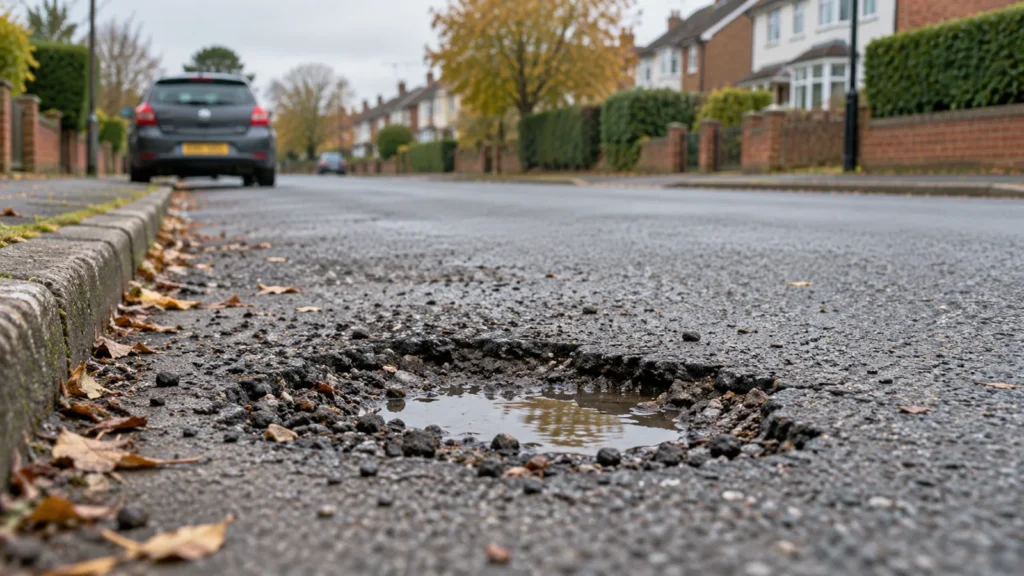
Image: original AI-generated illustration of a generic road defect, not a photograph of a funded project.
Noticed a problem after a rough road?
Describe the symptoms before choosing a repair. A noise alone does not identify the damaged part.
What does the pothole funding announcement cover?
The DfT describes the £220 million as incentive funding linked to councils meeting performance targets. It says further releases later in the year will also depend on performance. This announcement concerns councils in England; it should not be read as a new funding allocation for every UK nation.
The department also reports that nearly 7,000 miles of resurfacing will be completed this year. That is a programme-wide figure, not a measure of work financed solely by this £220 million release.
Why is Citroën calling for more than extra money?
In its 23 October response, Citroën argues that investment needs to be accompanied by better planning. Its Better Roads Manifesto advocates using artificial intelligence to help identify and prioritise defects, more consistent repair standards and greater accountability after utility works. These are the manufacturer's policy proposals; the statement does not establish that councils have adopted them nationally.
How can you report a pothole?
Use GOV.UK's pothole reporting service to find the responsible council in England or Wales. Motorways and A-roads managed by National Highways in England have a separate reporting route. The same government page links to the appropriate services for Scotland and Northern Ireland.
Give an accurate location and keep the report reference. Take photographs only where you can do so safely; do not step into live traffic to obtain evidence. Reporting a defect is useful, but does not confirm when it will be repaired.
What should you do if the car feels different afterwards?
If a rough impact is followed by a new vibration, pulling, knocking or pressure warning, note what changed and arrange an appropriate inspection. Do not assume that wheel alignment alone will solve it, or order suspension parts from the symptom without a diagnosis.
If the vehicle feels unsafe, stop somewhere safe and seek assistance rather than continuing to test it on the road. Check tyres and wheels only from a safe position. Our autumn tyre checks explain the routine checks worth keeping up with.
Plan the right next step
Check the services available for your vehicle and postcode before booking.
Find suitable help through HON CAR SERVICE
Browse suspension, steering and tyre repair options, or read how booking works. Availability and the appropriate inspection depend on your vehicle, symptoms and location.
Check your vehicleRelated reading
- Tyre Safety Month: essential autumn checks
- Tyne Bridge closure: dates and travel advice
- Cross-pavement EV charging: what changed in England
Original sources
- Department for Transport funding announcement, 21 October 2026
- Citroën's response and road-maintenance proposals, 23 October 2026
Published 25 October 2026. Funding announcement dated 21 October; manufacturer response dated 23 October.