
Gearbox Problems: 9 Warning Signs and What You Can Check at Home
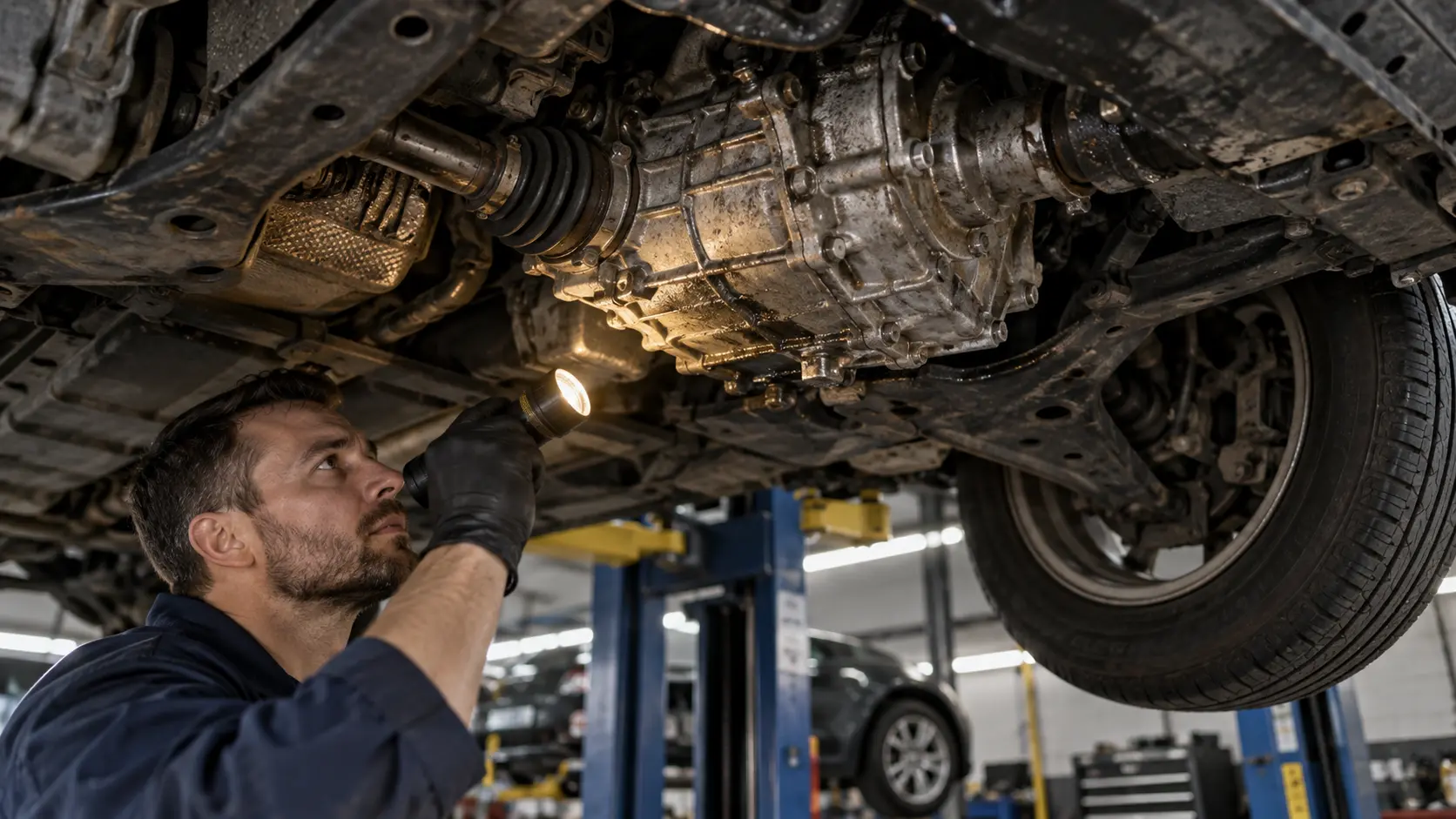
Learn nine gearbox warning signs, safe checks to make at home and when to stop driving and arrange an inspection.
Your car may need attention if it struggles to select a gear, the engine revs without normal acceleration, or you notice a new noise, smell, leak or warning message. These signs do not prove that the gearbox itself has failed: the clutch, engine, mounts, driveshafts, electronics or other drivetrain components can feel similar.
This guide explains common gearbox warning signs, safe checks you can make without dismantling the vehicle, and when you should stop driving and arrange an inspection.
How do you know if your gearbox needs attention?
Common warning signs include difficult gear selection, slipping or loss of drive, delayed engagement, unusual whining or grinding, fluid leaks, shuddering, burning smells and transmission-related warning lights. The same symptom can have different causes on manual, automatic, dual-clutch and CVT vehicles, so diagnosis matters.
What does the gearbox do?
The gearbox, or transmission, transfers engine power to the wheels and provides different ratios for moving away, climbing hills and cruising. Manual cars use a clutch and driver-selected gears. Automatic systems vary considerably and may use different hydraulic, electronic or belt-and-pulley arrangements.
9 gearbox warning signs
1. Gears are difficult to select
A stiff lever, refusal to select first or reverse, or grinding during a change can involve clutch disengagement, cables, linkage, synchronisers or an internal fault. Do not force the lever or keep trying if a gear will not engage.
2. Revs rise without normal acceleration
If engine speed rises but road speed does not respond normally, a slipping clutch is one possibility on a manual car. Automatic transmission slip or another power-transfer fault can feel similar. Avoid hard acceleration and repeated testing.
3. New whining, humming, grinding or clunking
| Sound or behaviour | Possible area to investigate |
|---|---|
| Whine changing with road speed or gear | Bearing, gear or drivetrain concern |
| Grinding during a manual change | Clutch, selector or synchroniser concern |
| Clunk selecting Drive or Reverse | Mounting, drivetrain or transmission-control concern |
Note when the noise occurs: accelerating, slowing down, changing gear, turning or idling. The sound alone cannot identify the failed part.
4. Fluid appears beneath the car
A fresh patch deserves attention, but it is not automatically gearbox fluid. Colour varies by vehicle and a clear patch after air conditioning may be condensation. Look from outside the vehicle, note the location and do not add unidentified fluid. Many modern transmissions have no owner-accessible dipstick.
5. Jerking, shuddering or vibration
Sudden shuddering during pull-away or gear changes can involve the transmission, clutch, mounts, engine or driveshafts. An engine misfire can also feel like a transmission fault. Record whether it happens only during changes or also while idling.
6. Gearbox or engine warning light
A warning light or reduced-power message needs proper interpretation. Fault codes should be considered alongside the symptoms; clearing them does not repair the cause and can remove useful diagnostic information.
7. Burning smell or smoke
Possible causes include an overheating clutch, hot fluid, an oil leak contacting a hot component or an electrical fault. If there is smoke, a strong burning smell or a transmission-temperature warning, pull over safely, switch off and seek assistance.
8. The car slips out of gear or loses drive
An unexpected jump out of gear or sudden loss of acceleration can be dangerous in traffic. Stop somewhere safe and arrange professional assistance rather than continuing to test the vehicle.
9. Reverse gear becomes difficult
Refusing or delayed reverse can involve the clutch, selector, controls or transmission. Avoid repeated revving or forcing the selector, especially if forward gears are also affected.
Is it the gearbox or the clutch?
Manual-car symptoms often overlap. Revs rising without acceleration may indicate clutch slip; difficulty selecting gears may involve clutch disengagement or linkage; grinding in one gear may involve a synchroniser or clutch-related issue. These are clues, not a diagnosis, and the surrounding components should be checked before recommending a gearbox replacement.
Safe checks you can make at home
- Park safely on level ground and look for a new fluid patch without getting underneath the vehicle.
- Read any dashboard warning message and note when it appeared.
- Write down which gears are affected and whether the symptom occurs hot, cold, accelerating or slowing down.
- Check the owner's manual for approved fluid checks and warnings.
- Do not dismantle components, crawl under the car or add fluid without confirming the specification.
When should you stop driving?
- The car suddenly loses drive or slips out of gear.
- You cannot select gears reliably.
- There is smoke, a strong burning smell or an overheating warning.
- A substantial leak or severe grinding noise is present.
- The car jerks or accelerates unpredictably.
For a mild new noise without a change in how the car drives, arrange an inspection promptly. If you are unsure whether it is safe to continue, ask a qualified mechanic or recovery provider before setting off.
How much does gearbox repair cost?
There is no single UK price. A clutch, mount, linkage or external control fault is different from internal gearbox damage, and automatic transmissions may need different diagnostic procedures. Diagnosis should come before assuming that the whole gearbox needs replacing.
Use the HON CAR SERVICE services page or our booking form to request the appropriate inspection or repair.
Frequently asked questions
Can a gearbox fail without making a noise?
Yes. Delayed engagement, slipping, warning messages or a change in drive quality can occur without a loud noise.
Does a stiff gear lever mean the gearbox needs replacing?
Not necessarily. The clutch, cables, linkage or selector may be involved. An inspection is needed before choosing a part.
Will changing gearbox oil fix a noisy gearbox?
Only if the correct service is relevant to the actual cause. It cannot repair worn gears, bearings or other mechanical damage, so the vehicle should be assessed first.
Can a low battery cause automatic gearbox warnings?
On some vehicles low system voltage can affect electronic controls, but the battery should be tested rather than assumed to be the cause.
Can a mechanic diagnose the problem without replacing the gearbox?
Yes. Checks may include fault codes, fluid condition where applicable, clutch operation, selection components, mounts and other drivetrain parts.
Book a gearbox inspection with HON CAR SERVICE
If your car is difficult to put into gear, making an unusual noise or behaving differently during acceleration, arrange an inspection before the fault becomes a loss-of-drive problem.