
What Does a Car Alternator Do? How It Works, Warning Signs and Testing
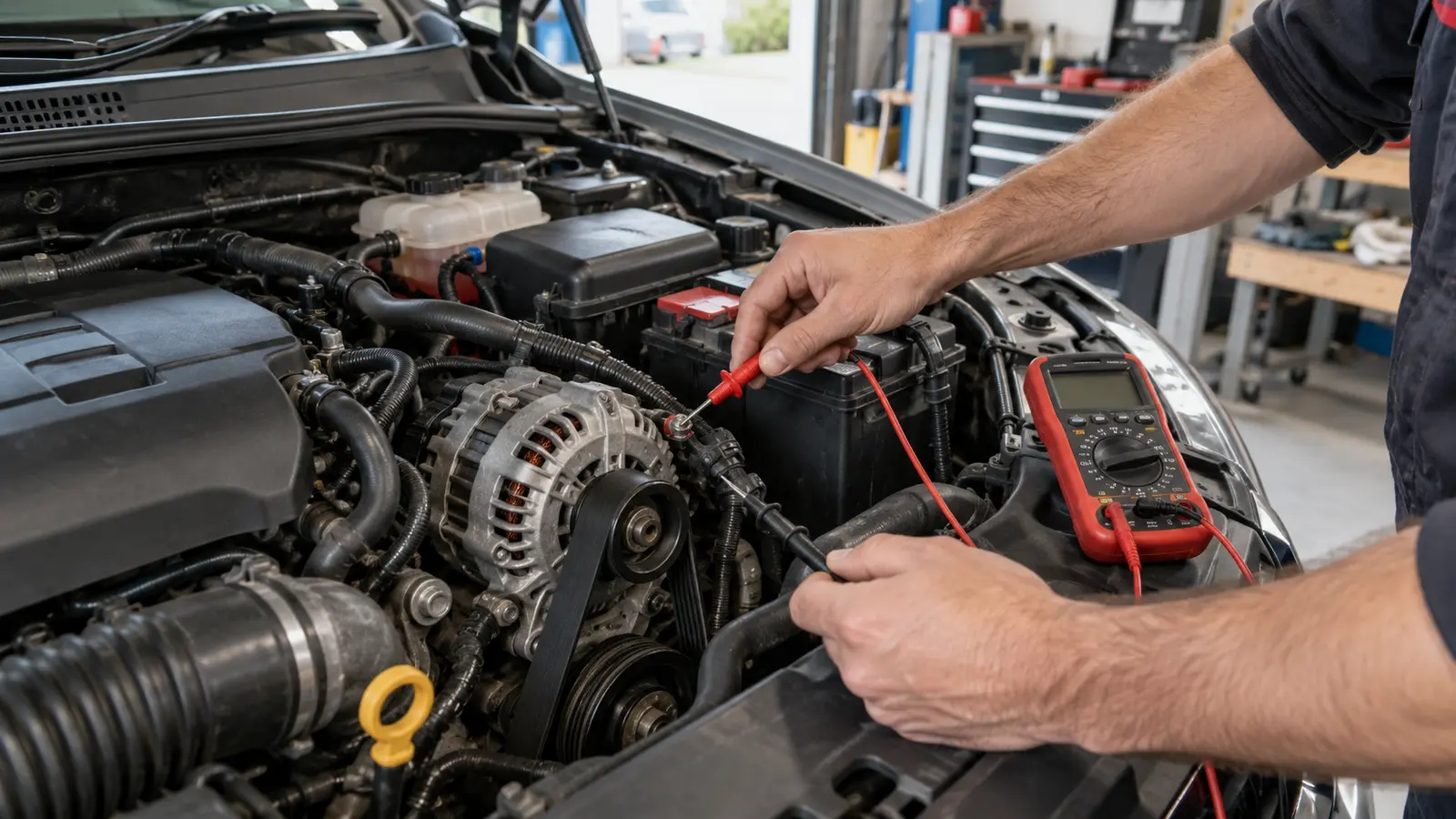
Learn what a car alternator does, how it charges the battery, common warning signs and when to book a charging-system inspection.
A car alternator is an engine-driven generator that powers the vehicle's electrical systems while the engine is running and helps recharge the 12-volt battery. If the charging system develops a fault, the car may continue running temporarily before electrical power falls and the engine stops.
A battery warning light does not automatically mean the alternator needs replacing. The alternator, auxiliary belt, wiring, battery, voltage regulation and charging controls all need to be considered.
What does an alternator do?
In most conventional petrol and diesel cars, the alternator is turned by an auxiliary belt connected to the engine. It generates electricity for systems such as lights, wipers, heated windows, engine electronics and infotainment, while helping restore energy used from the battery during starting.
Inside the alternator, a rotating magnetic field produces alternating current. A rectifier converts this to direct current and a voltage regulator controls the output. Modern vehicles may use intelligent charging controls, so the correct voltage depends on the vehicle and its operating conditions.
Alternator versus battery
| Component | Main job |
|---|---|
| Battery | Stores electrical energy and supplies the high current needed for starting. |
| Alternator | Generates electricity while the engine runs and supports battery charging. |
| Starter motor | Uses battery power to turn the engine during starting. |
| Voltage regulator | Helps control the charging system's electrical output. |
A flat battery may be caused by a weak battery, poor connections, an electrical drain, infrequent use or an alternator that is not charging correctly. Testing both systems is safer than replacing parts on a guess.
7 signs an alternator or charging system may be failing
1. The battery or charging warning light stays on
A red battery-shaped warning light while the engine is running can indicate a charging-system problem involving the alternator, belt, wiring or controls. Follow the handbook and stop safely rather than assuming a new battery will fix it.
2. Headlights become dim or flicker
Unusual changes in headlight or interior-light brightness can be associated with unstable voltage, although lighting faults and wiring problems can feel similar.
3. The battery repeatedly goes flat
If a charged or recently replaced battery quickly becomes discharged, investigate charging performance, battery condition and possible electrical drains.
4. Several electrical systems behave unexpectedly
Multiple electrical symptoms appearing together can point to low or unstable system voltage. Proper testing is needed to identify the source.
5. A new whining or grinding noise appears
Alternator bearings, pulley components, an auxiliary belt or another engine-driven accessory may create noise. The sound alone cannot identify the faulty part.
6. You notice a burning smell or smoke
Overheating wiring, a slipping belt or an electrical component can produce a burning smell. If there is smoke or a strong smell, switch off safely and arrange assistance. Do not reach near hot or moving components.
7. The engine stops and will not restart
If charging fails, stored battery energy may eventually run out. An engine that stops has several possible causes, so the charging system should be tested rather than assumed to be at fault.
Alternator or battery: what might be investigated?
| What you notice | Possible areas to investigate |
|---|---|
| Slow cranking | Battery, connections or starting system |
| Warning light while driving | Charging system, belt, wiring or controls |
| Battery repeatedly flat | Battery condition, charging performance or electrical drain |
| Starts after a jump then stops later | Charging-system problem is one possibility |
A jump-start is not a reliable alternator test. The vehicle may run briefly from stored battery energy even when charging has failed.
Can you test an alternator at home?
If you are familiar with a digital multimeter and the vehicle handbook permits battery-terminal testing, you can record a basic reading with the engine off and compare it with one while running. Keep hands, clothing, leads and tools away from belts and pulleys.
Voltage figures are general references, not pass-or-fail specifications for every vehicle. Intelligent charging systems can change output, and a normal reading at one moment does not rule out an intermittent or load-related fault.
Never disconnect a battery terminal while the engine is running. Do not attempt charging tests on high-voltage hybrid or electric-vehicle components.
What can cause a charging fault?
- Internal alternator wear or failure
- A loose, damaged or slipping auxiliary belt
- A faulty pulley or tensioner
- Poor battery connections, wiring or earth points
- A charging-system fuse or fusible link fault where fitted
- Voltage-regulation or vehicle-control problems
Replacing the alternator without checking these areas can leave the original fault unresolved.
Is it safe to drive with a faulty alternator?
If the alternator is not supplying enough electricity, the battery may support the car only temporarily. Electrical functions can then fail and the engine may stop. If the charging warning light appears, follow the handbook and stop somewhere safe. Arrange recovery if the car loses electrical power, steering effort increases or the engine overheats.
Do hybrid and electric cars have alternators?
Fully electric cars generally use a DC-DC converter rather than a conventional belt-driven alternator. Hybrid designs vary and may use a converter or motor-generator system. A 12-volt fault on an EV or hybrid needs the correct vehicle-specific procedure, and high-voltage components must only be handled by appropriately qualified personnel.
Frequently asked questions
Can a car run without a working alternator?
A conventional petrol or diesel car may run temporarily on stored battery energy, but it can eventually lose power and stop. Do not rely on it to complete a journey.
Does the battery warning light always mean the alternator is faulty?
No. The belt, wiring, battery, controls or another charging component may be involved.
Can a faulty alternator damage a new battery?
A charging fault can leave a battery undercharged, while excessive charging voltage can also damage it. Test the system before fitting a replacement.
Will a new battery fix an alternator problem?
No. A new battery may also become discharged if the charging fault remains.
How long should an alternator last?
There is no guaranteed lifespan. Vehicle design, mileage, operating conditions and component quality all affect longevity.
Can I replace an alternator myself?
The difficulty and safety requirements vary by vehicle. If you are not trained and equipped to work around belts and electrical connections, arrange a professional repair.
Book an alternator inspection with HON CAR SERVICE
A battery warning light or repeated flat battery should be assessed before replacing parts unnecessarily. Use the HON CAR SERVICE services page or booking form to request the appropriate inspection or repair.